The Community of Writing Fellowship (CoWF) is an initiative co-sponsored by the Society for the Anthropology of Work (SAW) and the Anthropology of Work Review (AWR). In the summer of 2025, this opportunity was advertised through the American Anthropological Association’s online community boards, a digital infrastructure that brought together scholars who otherwise may never have met. What followed was a year of writing, mentorship, and intellectual community spanning multiple countries, institutions, and time zones.
This collaborative post is the product of that year. More than a collection of writing projects, it offers a glimpse of how care has been—and continues to be—cultivated through the digital architectures of post-pandemic academia.
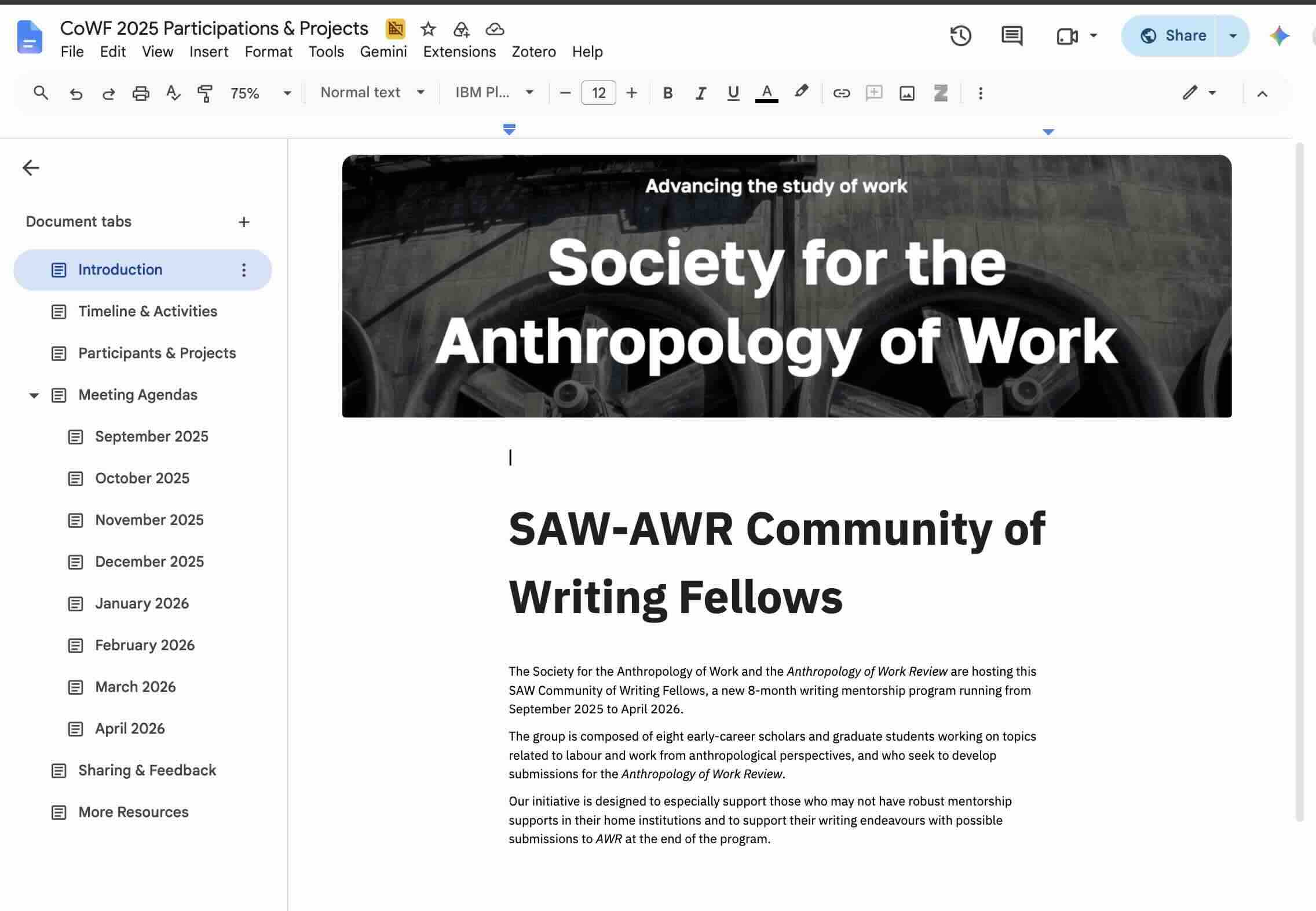
A screenshot of the SAW-AWR fellowship program (Google Docs)
Introduction: A Roadmap of this Post
What does a writing community look like across countries, time zones, research traditions, and lived experiences? The structural design of this collaborative post offers one answer. We invite readers into a constellation of ethnographic writing projects developed over a year through the CoWF initiative. The post unfolds in three movements. We begin with our initiative mentor’s reflection on the origins of the fellowship and the collaborative ethos that shaped it. The post then introduces each fellow through a brief overview of their writing project, highlighting the questions that guided our conversations throughout the year. Finally, it concludes with a simple creative writing exercise that reminds us of the human-ness that serve as backbones of our academic work.
About the Community of Writing Fellows (CoWF)
Jenny Shaw, Associate Professor, Thompson Rivers University, ne Secwepemcul’ecw
The Community of Writing Fellows arose in discussion with the Anthropology of Work Review (AWR) Editorial Collective and me, Mentorship Coordinator for the Society for the Anthropology of Work. We sought to establish a long-lasting program that would support early-career and equity-deserving scholars in their writing practice.
We distributed the Call for Participants in the summer of 2025 and received an astounding 30 applications. We accepted eight participants from six different countries and began our eight-month journey of sharing, reviewing, and encouraging each other’s projects. We engaged in monthly meetings where we were joined by a guest mentor from AWR and focused on two participants’ manuscripts. We had one workshop with Ideas on Fire, learning how to see our own work-in-progress through a development editing lens. And, we sought to cultivate a community of practice approach to writing focused on collaboration and support.
Our hope was that participants would exit the program with a submission-ready manuscript and a committed group of peers who might help encourage their writing practice in other ways going forward.
Fellows and Writing Projects
Below is a list of fellows and their projects, listed in chronological order of last names.
How do Indian platform drivers experience and interpret the risks of platform work in relation to algorithmic systems and customers?
Abza Bharadwaj, PhD Scholar, Indian Institute of Technology Delhi, India
While precarity and algorithmic management provide useful conceptual frames, I argue that platform driving in India involves a more expansive form of vulnerability that is simultaneously economic (wage volatility and debt), social (caste-class devaluation), and civic (gendered suspicion in public spaces). To theorize this, I draw on and extend Polanyi’s notion of embeddedness, proposing the analytic of triple disembeddedness to describe how platform labor becomes detached from protective institutions, social worth, and civic presumption of safety.
What if work itself no longer works?
Melissa Crane, PhD Candidate in Social Anthropology, University of Manchester
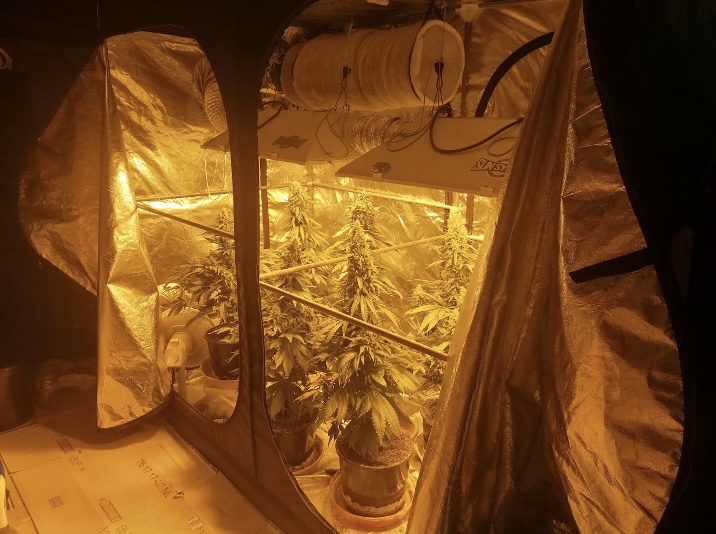
View into an indoor grow tent lit by amber lights, showing several potted plants, reflective walls, and overhead equipment.
In post-industrial Britain, work is no longer a reliable way to survive. In Kirkby, on the outskirts of Liverpool, the people I worked with don’t depend on jobs; they work around them. Waged labour is often unstable, insufficient, or counterproductive, costing, rather than earning money.
Instead, people piece together livelihoods across informal work, welfare, and digital platforms, constantly adjusting to make ends meet. For my interlocutors, livelihoods depend not on stability but on navigating uncertainty and balancing multiple income streams, whilst simultaneously managing state scrutiny.
This challenges dominant ideas about work as the foundation of independence and dignity. For many, it is not work that provides financial security, but the ability to move between different forms of earning whilst keeping the state at arm’s length.
What does it mean to work, endure, and claim dignity at the margins?
Lakshana Gupta, Ph.D. Scholar, Department of Sociology and Social Work, Himachal Pradesh University, Shimla (H.P.), India
My project examines how transgender and gender-nonconforming communities in Jammu and Kashmir navigate work in a region shaped by conflict, militarization, and economic precarity. Drawing on ethnographic fieldwork, I trace how exclusion from formal employment pushes many into stigmatized labour——ceremonial performance, begging, and sex work where livelihoods are entangled with surveillance, harassment, and fragile recognition. Engaging labour anthropology, feminist political economy, and decolonial thought, the project situates these experiences within broader structures of power and inequality.
This work contributes to global conversations on work by foregrounding voices from a conflict zone, showing how resilience, identity, and labour are co-constituted under conditions of marginalization.
What if surviving itself is labor?
Christine Kim, Ph.D. Candidate, Department of Anthropology, University of California, Irvine
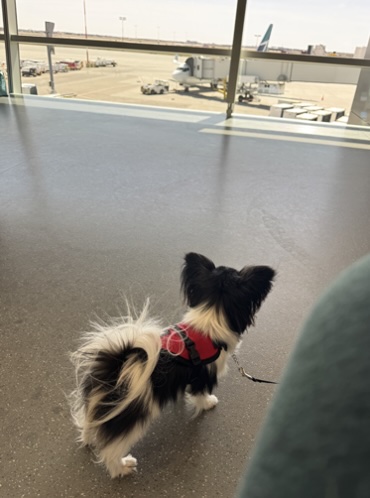
A small black-and-white dog wearing a red vest stands in an airport terminal, looking out toward an airplane parked at the gate through large windows.
I am human, just as much as I am an NSF-funded ethnographer. The COVID-19 pandemic— social distancing, online learning, the digital university— were the structural conditions I was tasked to survive alongside rigorous scholarly training. Drawing from ethnographic fieldwork in digital Deaf worlds and a future-facing personal archive of survival, this writing project collapses the stark divide between person and scholar, speculating a more human world where marginalized bodies can be perceived as capable of producing new knowledge. The piece also experiments with genre and multimodal communication, drawing on practices I developed through professional work in simultaneous interpretation and UI/UX alongside doctoral training.
This research has been funded by the Cultural Anthropology and STS programs at the National Science Foundation (NSF #2445029), the Core University Program for Korean Studies of the Ministry of Education of the Republic of Korea, and Korean Studies Promotion Service at the Academy of Korean Studies (AKS-2021-OLU-2250006).
What does a tobacco leaf feel like? Is a trained nose objective enough?
Amrita K. Kurian, Research Fellow, Max Weber Forum for South Asia Studies; Non-Resident Visiting Scholar, Center for the Advanced Study of India (CASI), University of Pennsylvania
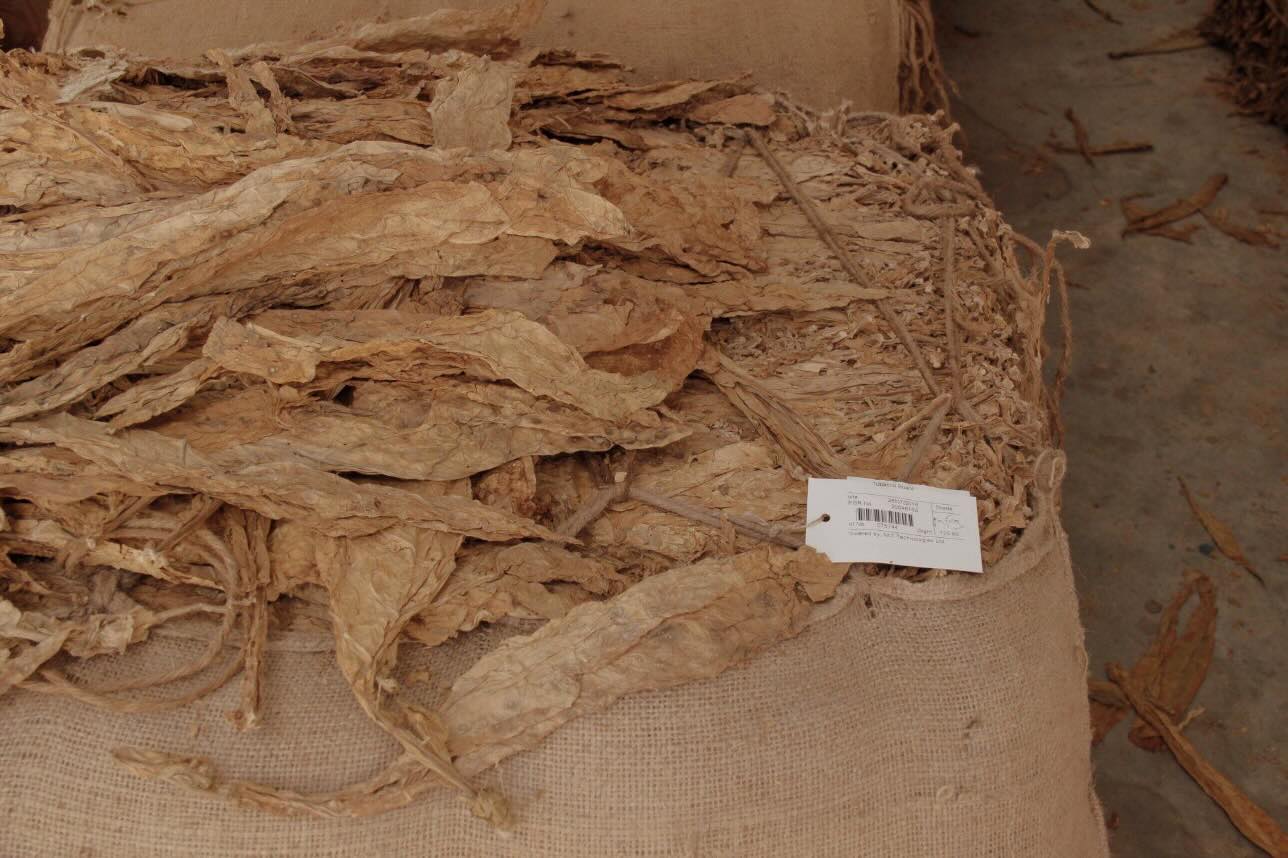
Close-up of dried leaves stacked neatly with a paper identification tag.
My article draws on ethnographic fieldwork on Flue-Cured Virginia (FCV) tobacco auction floors in rural Andhra Pradesh — where, on any given morning, state regulators and traders move through some 600 tightly packed bales of cured leaves, pricing and bidding on them one at a time. The technology that makes this possible is sensory grading: trained experts using their eyes, hands, and nose to assign a grade to each bale, a few brisk steps ahead of the auction train. It’s fast, it’s embodied, conducted in severe heat and tobacco dust, and yes — there are frequent errors.
Traders marshal the oldest dichotomy in scientific debate — objectivity versus subjectivity, the fallibility of being human — to undermine what is otherwise a cost-effective and democratic technology. These discourses, circulating in scientific symposia and as auction-floor gossip, produce self-doubt and mutual surveillance among experts. Can we re-define sensory grading as an intersubjective practice — where reliable knowledge emerges through mimetic training, tenuous consensus, and the slow, shared acquisition of knowing how a good leaf feels?
What local meanings are attached to work, discipline, learning, and childhood?
Waqar Mehmood, MPhil Anthropology, Department of Anthropology, Quaid-i-Azam University, Islamabad
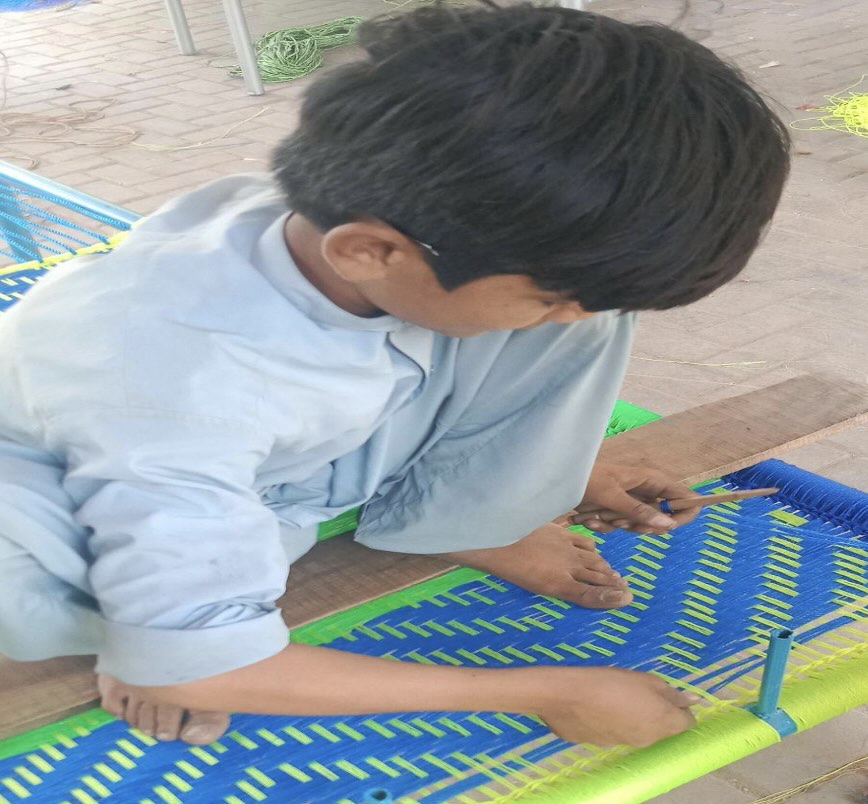
A young apprentice sits at a brightly colored weaving frame, carefully threading blue and green fibers by hand.
My research explores why many lower-middle-class families in Sindh increasingly favor skill-based learning over formal schooling. Based on ethnographic fieldwork in Larkana, I examine how children’s participation in informal apprenticeships, often framed as “child labor” is instead understood by families as a practical pathway to economic stability and social mobility. In a context where formal education frequently fails to translate into meaningful employment, parents and children make strategic decisions that challenge dominant narratives of schooling as the only legitimate route to success. By foregrounding children’s lived experiences and family aspirations, this work rethinks the binaries of education versus labor, and questions policy frameworks that overlook local realities. Ultimately, my research argues for a more grounded understanding of learning, one that recognizes skill acquisition, dignity, and survival as central to how marginalized communities imagine their futures.
How do sewer workers reflect upon, navigate, as well as contest the devaluation of sewer work?
Aarushie Sharma, PhD Candidate, Department of Anthropology, York University
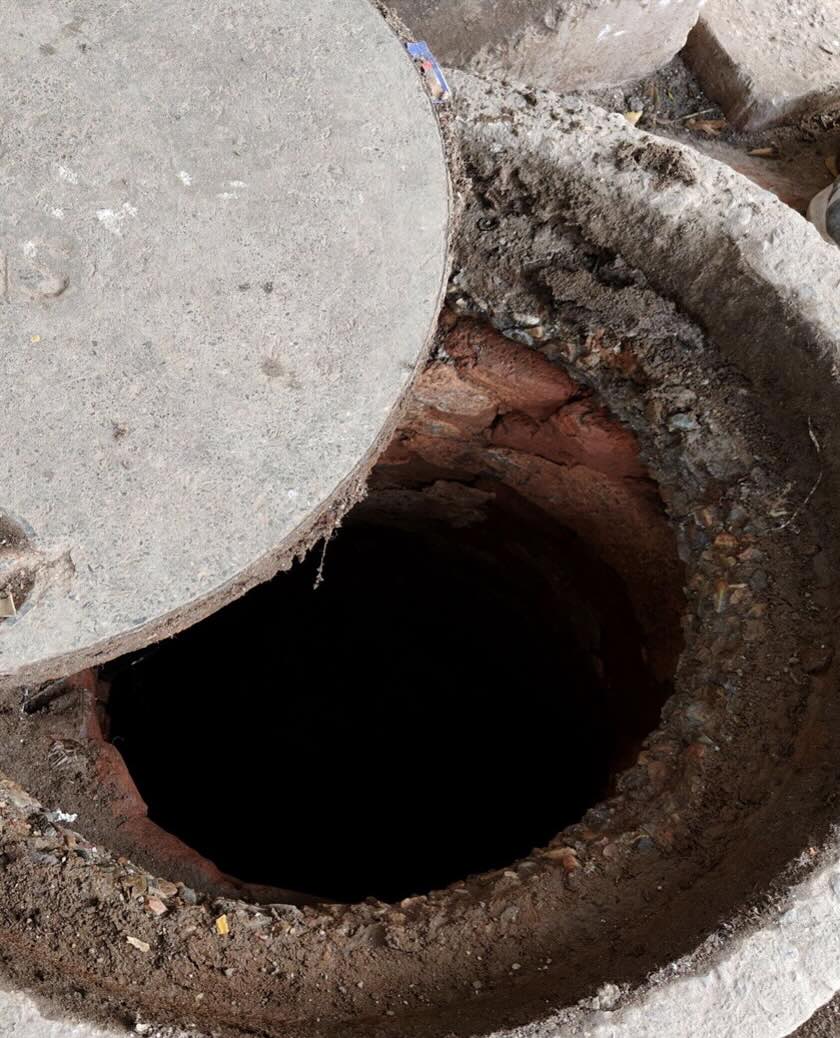
An open manhole with its concrete cover pushed aside, revealing a dark sewer shaft below.
Drawing on ethnographic fieldwork with sewer workers, supervisors, and activists in Delhi, India, my research examines the everyday practices of sewer work, and how this work intersects with the politics of caste and contractualization in contemporary India. It traces the tasks, tools, and equipment central to this work; the local knowledge (mētis) and sensory cues workers rely on in carrying out work that is simultaneously ‘dirty’, risky, and hazardous; and how this work remains reliant on manual labor despite new machinery and legal prohibitions – a telling sign of how ‘modern’ urban infrastructures are undergirded by caste-based manual labor. Further, by examining how workers mobilize and articulate techniques, as well as their claims to ‘technical’ expertise, I discuss the ways in which they contest the devaluation of sewage work. Overall, the research demonstrates that re-centering ‘work’ in the study of infrastructures foregrounds the labor of historically invisibilized workers, while also allowing an examination of the relations and contradictions greasing those infrastructures.
How do smallholders in Sululta District, Ethiopia, experience the shift from land-based livelihoods to wage dependency, and what can we learn from it?
Alemnesh Tsehay, PhD in Peace and Development Studies and Researcher, Salale University, Ethiopia.
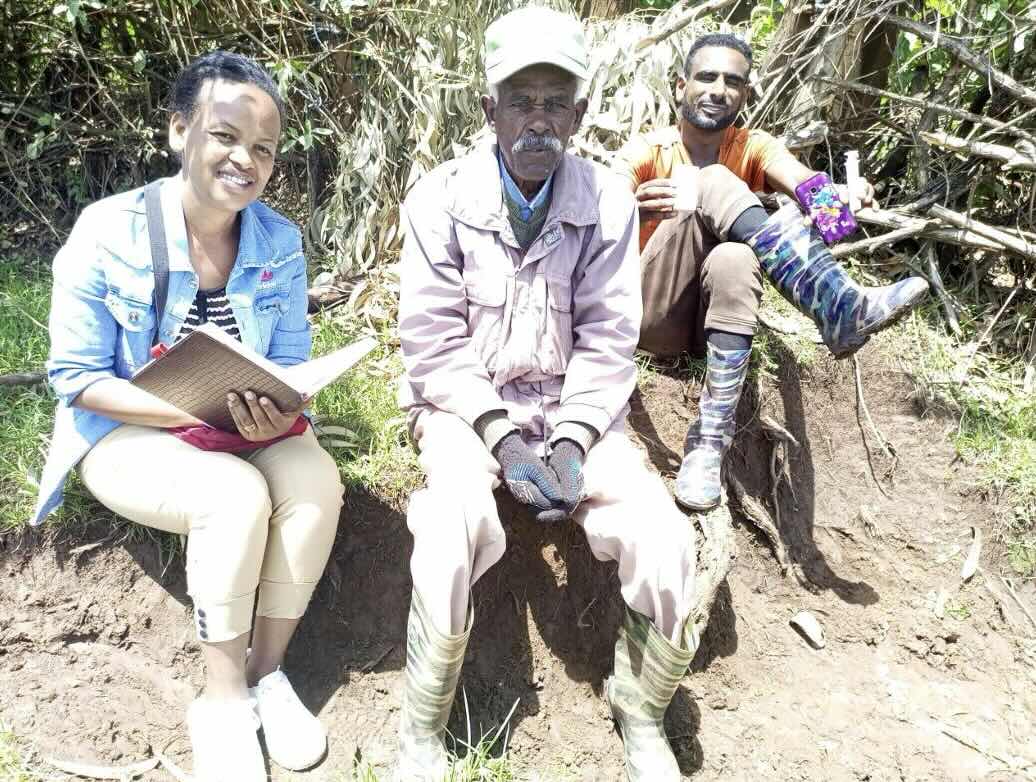
The researcher sits outdoors with two smallholder farmers, holding a notebook while smiling at the camera.
My current writing project is based on ethnographic research conducted in Sululta District, Ethiopia, and explores how the rapid expansion of large-scale flower farms is transforming rural livelihoods and labor relations. Specifically, it investigates how smallholder farmers experience and respond to the processes of depeasantization and proletarianization as they are dispossessed of land and compelled to enter precarious wage labor in floriculture or seek informal work in urban centers. The study centers on farmers’ perspectives to illuminate how global agribusiness reshapes agrarian identities and labor structures in Ethiopia. This project aligns closely with the Anthropology of Work Review’s mission to explore labor and work from anthropological perspectives. It contributes to broader conversations on rural dispossession, informal labor markets, land commodification, and the changing nature of work in the Global South. By centering the voices of smallholder farmers, it seeks to enrich academic understanding of how work is redefined and contested under neoliberal development pressures.
Conclusion: Writing as a Community Practice
Throughout the fellowship, we learned that cultivating a writing community involves much more than exchanging manuscript comments. It also means creating space to share the everyday practices, memories, and relationships that shape scholarly life but rarely appear on the page. To close this post, we return to a creative writing exercise introduced by outgoing editor of AWR, Tarini Bedi, during our second CoWF meeting on October 16, 2025. Our discussion centered around this deceptively simple question—How do you cook your staple food?— continues to remind us that work, care, survival, and scholarship are all grounded in ordinary routines that connect us across different places and traditions.
Afterword: How do you cook your staple food?
Responses are listed in reverse chronological order of last names.
Alemnesh: Ethiopia is a multicultural nation-state, and we have several staple foods. Almost all staple foods are produced by smallholder farmers. The staple food I am familiar with is injera and wot (or stew). Injera is prepared from fermented teff flour and baked on a flat pan. Wot is prepared from onions, legumes, and other ingredients.
Aarushie: Memories of cooking rice instantly take me back to my mother’s kitchen. Rice is first washed, then soaked in water, before it’s cooked in the pressure cooker. When guests are over, the rice cooker – that demands more pantry space, is taken out from the shelf where it’s usually stored. Unpacking memories of food also unpacks the home, gendered divisions of labor, and many stories of cooking relatedness.
Waqar: As a male member of the family, I don’t know the traditional method of making staple food, but it’s not so complex to make them because hostel life makes me a survival cook, the recipe is simple. First, you have to soak the rice in water. In another pot, boil water in a quantity equal to the rice if the rice is newly cultivated; if it is old, use minimal water, not double. Once the water is boiled, put a pinch of salt and a little bit of oil into the boiling water, then put the soaked rice into the boiling water and wait for the water to evaporate. Then, turn off the pot, wait for a while with a slow flame, your rice is ready.
Amrita: Wash red rice in water twice (at least!). Add to a pressure cooker with twice the amount of water and cook for two whistles. Voilà — hot, steaming rice is ready to eat with the curries of your choice.
Christine: I very rarely had human-made rice when I was growing up in Seoul. It was always cooked in a rice cooker.
Melissa: Scouse is a staple food for many of us from Liverpool. I can’t share the recipe; it’s a family secret.
This post was curated by Multimodal Contributing Editor Christine Kim and reviewed by Contributing Editor Clarissa Reche.
