Note: this post contains an image of a deceased mouse. If you do not wish to view this image, you can listen to the post instead.
June 30 field notes:
I am letting myself succumb to the filth, to let the slime exist with and near me and the smells offend my nose
I saw residues of death today, the fluid and the other living creatures that arrive after the dead body is gone or removed
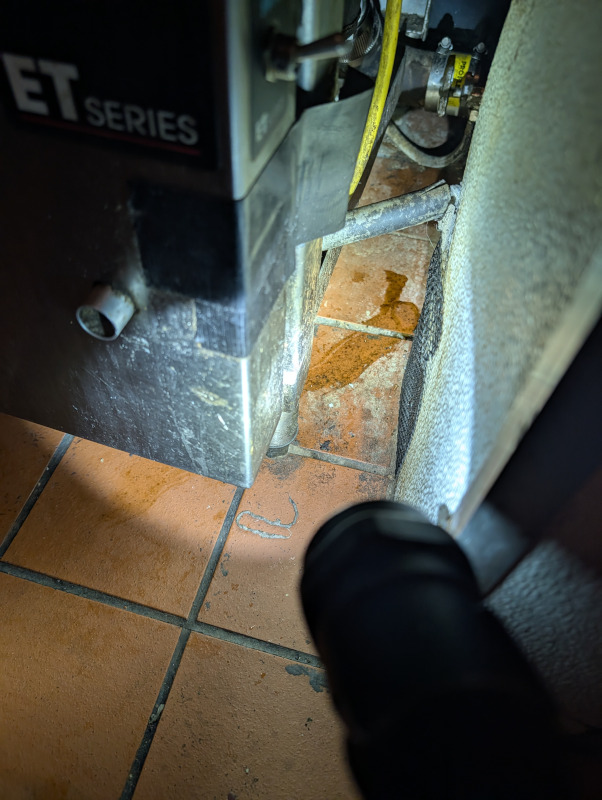
Fig. 1, Slime of a dead mouse body. Photo by author.
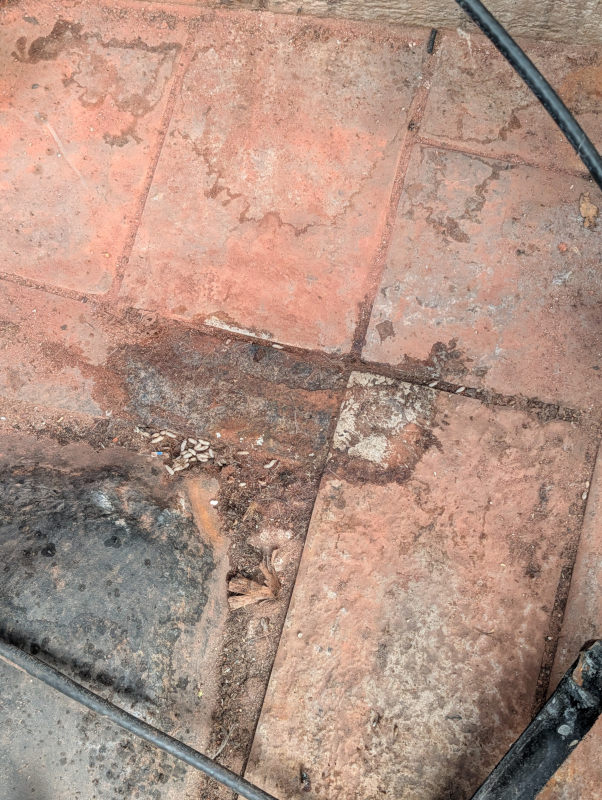
Fig. 2, Maggots after the body of rat was removed. Photo by author.
At the end of Camus’ (1942) The Stranger, the protagonist Meursault, as he awaits his execution for murder, says “for the first time, in that night alive with signs and stars, I opened myself to the gentle indifference of the world…” (122). I felt that I was opening myself to the gentle repulsion of the filth the longer I worked as an exterminator. As I knelt on the greasy floors of New York City (NYC) restaurants and crawled, blackening the knees of my pants and toes of my shoes, I was giving myself over to that which is repulsive. How do I confront my relationship with this filth?
This is an exploration of the phenomenological and corporeal experience of doing research with filthy and unloved others. It is an attempt at confronting beauty and love in and for contested things and beings. During the summer of 2026 I conducted research in NYC on human-rat relationships, which led to me becoming a licensed exterminator. To confront is to come face to face with something that is challenging. As an exterminator I came face to face with rats and slime and roaches, but I also had to come face to face with my own fear and disgust. In becoming an exterminator, I wanted to learn to “think like a rat,” to know this cryptic species. What I was not expecting was the confrontation and relationships I would form with filth and death. This short piece is one attempt at coming to terms with the corporeal and emotional confrontations with these things, things that made me gag and cry, laugh and love. I begin by thinking through filth and beauty then turn to love and extermination, concluding with how these confrontations might help us to live and die better with others.
Filth/beauty
Filth has been theorized as a term of condemnation, a term of excess, aggression and exclusion (Cohen and Johnson 2005; Lorimer et al. 2025). Filth is matter out of place (Douglas 1966). Filth is abjection, these bodily fluids – feces, urine, blood, decay – thrust onto us the breakdown of the integrity of the body. For Kristeva (1982) horror of the abject is the breakdown of the boundary of self and other, the horror is that the body is always breaking down, my body too can one day, like that of the rats, leave a death residue (fig. 1 and 2). Yet the capacity for life, a slippery, slimy fecundity, can also disgust and repulse (Miller 1997, 40–41). As Parkin (2017) notes “In all, fecundity is almost perverse. A proliferation that can only mean innumerable deaths” (461). I confronted my own life and mortality with this filth, as it threatens my health and identity. My experience working as an exterminator was a corporeal, phenomenological experience of losing the self and other boundary, such that I gave myself over to the repulsion, a job needed to be done. I felt entangled with filth, entangled with that which made me uncomfortable, allowing the sleeves of my white button down to become brown.
I was mainly doing pest management work in restaurants. I felt disgust and repulsion as I looked under stoves, shelving, and places that had been forgotten or were too tight or insignificant to reach with a mop or broom. There were dead bugs and stalagmites of grease (fig. 4). Pushing past my initial revolt, I began to feel honored, privileged even, that I was able to perceive spaces forgotten to the world, spaces left alone to build up filth. I began to appreciate how this filth became nourishment for fruit flies who eat the buildup of grease and yeast behind bars and maggots who are nourished by the residue of death (fig. 2).
Rewind. Ten years ago, I was living in an abandoned church, squatting with the other rats and mice, similarly deemed a “pest” to society because I was addicted to drugs. This abandoned church was dirty, there was no heat or running water, the ceilings were falling in, exposing gaping holes, but I would decorate it, I would hang up pictures on the peeling walls, I would sweep the floor and vacuum the carpet of this abandoned building as the falling ceiling and crumbling drywall would gently fall back to the ground behind me. A futile act maybe, but an act of care, nonetheless. The abandoned church was falling apart, and it was full of deadly things, but it was the most beautiful home I ever lived in, and I cared for it. “Something beautiful fills the mind yet invites the search for something beyond itself, something larger or something of the same scale with which it needs to be brought into relation” (Scarry 2013, 29). Elaine Scarry’s On Beauty and Being Just suggests beauty is a call to moral imagination in which the root of our desire to pursue beauty is our desire for a true care that notices and perpetuates beauty of all life (Scarry 2013, 90). For Scarry, beauty is sacred, unprecedented, lifesaving, all of the things filth is not. But what if filth was beautiful? If filth and the abject threaten identity (Kristeva 1982), beauty decenters identity, it moves us beyond ourselves (Scarry 2013). I attempted to capture the beauty in the filth that I encountered as an exterminator, vibrant greens in the slime behind bars and grease building up under a stove as if growing out of the ground like a tree (fig. 3 and 4). I wonder how we might collapse self and other duality, not as threatening, but as a decentering beyond ourselves, to see beauty in filth.
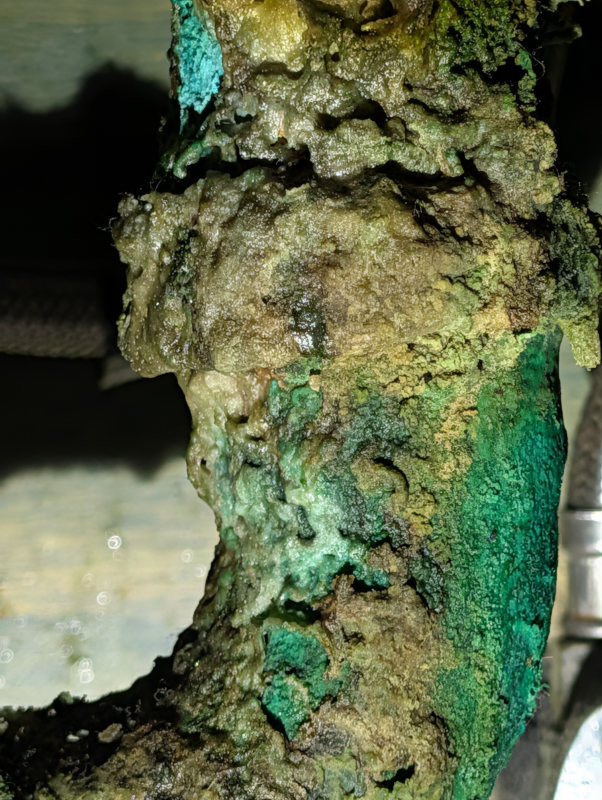
Fig. 3, Slimy build up on a pip underneath a bar. Photo by author.
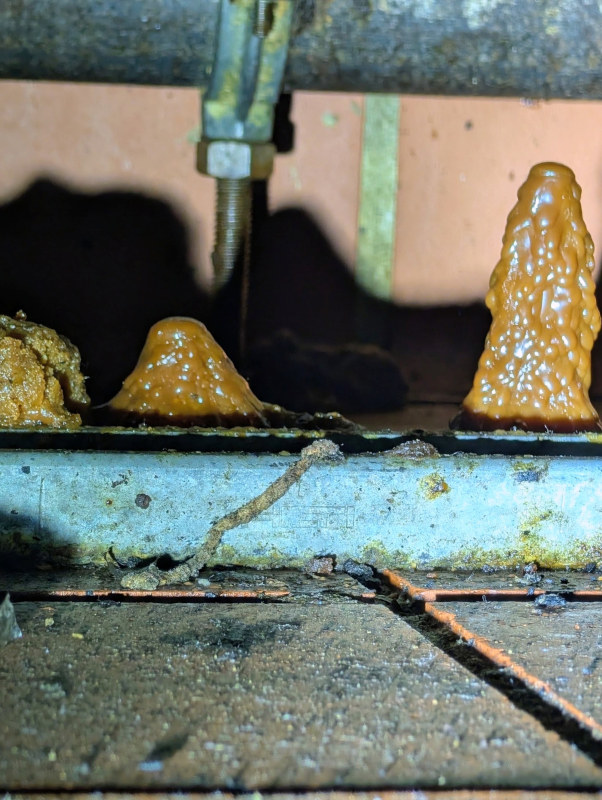
Fig. 4, Grease stalagmite underneath of a restaurant stove. Photo by author.
Exterminating/love
My day started at 3:30am. It was at the end of July 2026, and I had been working as an exterminator for a month. My first job was a restaurant in Brooklyn that had a resilient little mouse who kept evading capture. I entered the restaurant and, only by the light of a flashlight, I watched a little body scurry across the floor and behind the bar. My job was to rid this space of rodents, yet I felt a sense of awe and joy for this mouse’s ability to evade me. Like the author Richard Wright, I too am fascinated by the pestiferous figure, not only for its abjection but for its “hunger and spirited refusal to be captured” (Bennett 2020, 23). “The rat dies, but first it lives” (Hovanec 2025, 114). I loved this mouse that got away, and I loved the mice that died. Still in the dark, I knelt near my bag and noticed something on a sticky trap that I had placed under a radiator for roaches and bugs. My heart sank. I got closer and my suspicions were confirmed, it was a baby mouse, dead on the sticky trap. I sat down and began to cry. The mouse who had run away from me moments earlier was likely the mama, what relational ties am I breaking? Did she love her baby?
But a job needed to be done, so I gathered myself and walked to the basement to check the boiler room. The week before I had set up at least ten sticky traps to try and curb the roach population. The boiler room is small and hot, and admittedly I am afraid of roaches.[1] As I checked the traps, my heart broke all over again – another baby mouse lay dead on the trap. Its small body was surrounded by shit, I began to cry again imagining how scared and stressed this poor baby was as it struggled to free itself. I brought both baby mice on sticky traps home with me.
Relation and care come in different forms, like sharing suffering, noticing, and even through detachment and becoming without (Haraway 2008; Tsing 2021; Ginn 2014; Reis-Castro 2021). Care and love do not entail not-killing. Govindrajan (2018) describes this in Animal Intimacies where the act of animal sacrifice co-exists with affection and love. Wanderer (2020) describes the care of an invasive pest as “biologies of betrayal” (46) in which carefully tending to pests produces knowledge about their characteristics that will then be turned against them in their management. Still other authors describe the violence within caring for an entire species (Parreñas 2018; Van Dooren 2016). We can love a wild rodent and still understand that it needs to be managed, even killed.
The standard practice of dead mouse disposal that I have witnessed involved folding up the sticky trap and throwing it into the city garbage cans. It is not standard practice to bring dead mice home with you. I am not sure exactly why I did it. Maybe I just wasn’t ready to say goodbye yet.
I killed it I loved it I threw it away
Noon. After the long workday sitting in my bag, the baby mice began to smell from summer heat. I brought them to Tompkins Square Park and, like decorating the decaying church, I adorned these decaying mouse bodies with flowers (fig. 5). I wrapped the boxes together in white fabric and carried them to the garbage can. I felt a sinking feeling as I placed these baby mice into the trash. What does something become once it enters a trash can (Edensor 2005; Hetherington 2004)? Are the baby mice different now? Should I love them less? I did not throw the mice away; my intention was not for them to become something different within the container of the trash. What if instead, the mice remained themselves and not trash once they entered that space? I cared for them deeply before I placed them into the trash can. How could they become trash so easily within the blink of an eye? The mice were marked as trash once in this space of the trash can, but they were already marked as killable pest by existing in the space of humans.
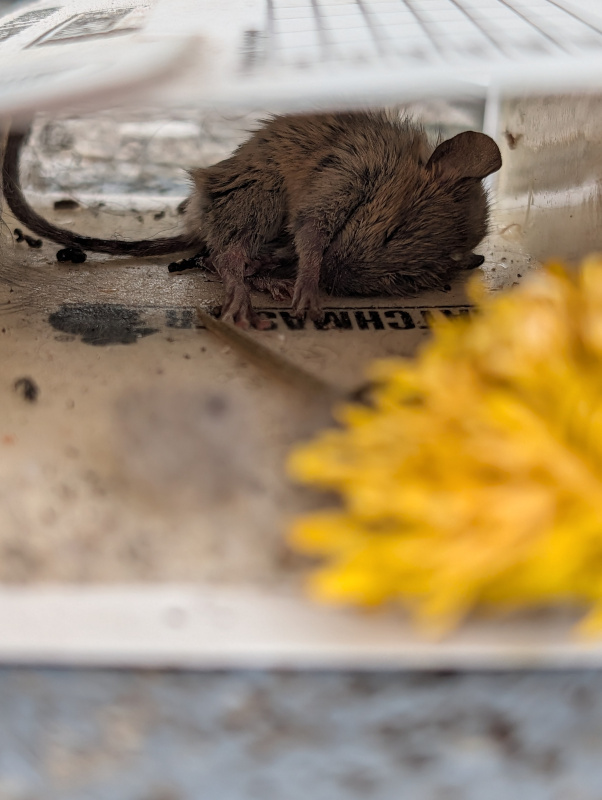
Fig. 5, baby mouse whom I love. Photo by author.
I end where I began: Meursault of The Stranger continues, “…For everything to be consummated, for me to feel less alone, I had only to wish that there be a large crowd of spectators the day of my execution and that they greet me with cries of hate” (123). Even hatred is a form of recognition. We are often indifferent (at best) to the existence of rodents and filth, more often they are perceived with disgust and hatred. Yet what if we found beauty and love for these things that produce aversion. What if we confront such things and beings face to face, for to meet the look of the other “is a condition of having face oneself” (Haraway 2008, 88). Beauty and love can be risky (Russo 1995, 11), and some argue that we cannot love and be disgusted by the same thing (Miller 1997, 33). But we can, and maybe the risk is worth taking. This short piece is not about not managing or cleaning, but it is about not just being indifferent to certain things (even if the world is, according to Albert Camus), it is “staying with the trouble” (Haraway 2016), it is staying with the discomfort or disgust yet still acting in love, in care. Even as an exterminator, spraying pesticide or putting out traps, I am doing so with love, with love for rats and mice and roaches and filth.
This post was curated by Lilith Frakes, and reviewed by Contributing Editor Samiksha Bhan.
Notes
[1] I had set the sticky traps out for roaches, yet maybe I need to love them too even though I screamed every time I encountered them on the job. But after I screamed, I would imagine Kafka’s Gregor Samsa from The Metamorphosis, I remembered his fate and I grew more sympathetic for this mouse sized bug wiggling its antennas.
References
Bennett, Joshua. 2020. “Rat.” In Being Property Once Myself: Blackness and the End of Man. Harvard University Press. http://ebookcentral.proquest.com/lib/cornell/detail.action?docID=6147559.
Camus, Albert, and Matthew Ward. 1942. The Stranger. 1st Vintage International ed. Vintage International.
Cohen, William A., and Ryan Johnson. 2005. Filth: Dirt, Disgust, and Modern Life. University of Minnesota press.
Douglas, Mary. 1966. Purity and Danger: An Analysis of Concept of Pollution and Taboo. Routledge Classics. Routledge.
Edensor, Tim. 2005. “Waste Matter – The Debris of Industrial Ruins and the Disordering of the Material World.” Journal of Material Culture 10 (3): 311–32. https://doi.org/10.1177/1359183505057346.
Ginn, Franklin. 2014. “Sticky Lives: Slugs, Detachment and More-than-Human Ethics in the Garden.” Transactions of the Institute of British Geographers 39 (4): 532–44. https://doi.org/10.1111/tran.12043.
Govindrajan, Radhika. 2018. Animal Intimacies: Interspecies Relatedness in India’s Central Himalayas. Animal Lives. The University of Chicago Press.
Haraway, Donna. 2008. When Species Meet. University of Minnesota Press.
Haraway, Donna. 2016. Staying with the Trouble: Making Kin in the Chthulucene. Duke University Press.
Hetherington, Kevin. 2004. “Secondhandedness: Consumption, Disposal, and Absent Presence.” Environment and Planning D: Society and Space 22 (1): 157–73. https://doi.org/10.1068/d315t.
Hovanec, Caroline. 2025. Notes on Vermin. University of Michigan Press. https://doi.org/10.3998/mpub.12756041.
Kristeva, Julia. 1982. Powers of Horror: An Essay on Abjection. Nachdr. Translated by Leon S. Roudiez. European Perspectives. Columbia Univ. Press.
Lorimer, Jamie, Roger Keil, Simon Goldhill, and Julie-Anne Boudreau. 2025. “Filth and the City.” Urban Political Ecology, May 2, 30497515251336638. https://doi.org/10.1177/30497515251336638.
Miller, William Ian. 1997. The Anatomy of Disgust. Harvard university press.
Parkin, Justine. 2017. “Fecundity.” Environmental Humanities 9 (2): 460–63. https://doi.org/10.1215/22011919-4215423.
Parreñas, Juno Salazar. 2018. Decolonizing Extinction: The Work of Care in Orangutan Rehabilitation. Experimental Futures. Duke University press.
Reis-Castro, Luísa. 2021. “Becoming Without: Making Transgenic Mosquitoes and Disease Control in Brazil.” Environmental Humanities 13 (2): 323–47. https://doi.org/10.1215/22011919-9320178.
Russo, Mary J. 1995. The Female Grotesque: Risk, Excess, and Modernity. Routledge.
Scarry, Elaine. 2013. On Beauty and Being Just. Princeton University Press. https://doi.org/10.1515/9781400847358.
Tsing, Anna Lowenhaupt. 2021. The Mushroom at the End of the World: On the Possibility of Life in Capitalist Ruins. New paperback printing. Princeton University Press.
Van Dooren, Thom. 2016. Flight Ways: Life and Loss at the Edge of Extinction. Paperback edition. Critical Perspectives on Animals Theory, Culture, Science, and Law. Columbia University Press.
Wanderer, Emily. 2020. The Life of a Pest: An Ethnography of Biological Invasion in Mexico. The University of California Press.
