“What would we say if a health system did not cure 60 to 70 per cent of health problems properly? And I can tell you more, this gigantic justice gap affects more people in the world than some of the big diseases we all know and read about – malaria, HIV, and tuberculosis!” a speaker exclaimed at an international conference called “Tech the Justice Gap” in 2020. Drawing a comparison between healthcare and access to justice, he continued, “5.1 billion unmet justice needs,” emphasizing that the lack of access to justice requires greater international attention.
While the figure was still new to me in 2020, I quickly became familiar with this widely cited figure among a global group of people working on access to justice during my ethnographic research on the global shift toward so-called “people-centered” justice as an emerging concept in international development (World Justice Project 2019). This “gigantic,” and now quantifiable, global “justice gap” has often been presented as a “justice crisis” requiring “urgent action” “to achieve #JusticeForAll and close the justice gap” (Linkedin Post, 2025).
Of course, this framing is not surprising at the current moment which is often described as the end of the rights-based or rule-based order or the crisis of liberal legalism used for the current crumbling of dominance and moral superiority of the West (e.g. Bens and Vetters 2025, 18). However, the notion of crisis also “serves as a transcendental placeholder because it is a means for signifying contingency” (Roitman 2014, 9). Moments of crisis are “mobilized in narrative constructions” (Roitman 2014, 3). As Janet Roitman argued, these moments are also “defined as instances when normativity is laid bare, such as when the contingent or partial quality of knowledge claims – principles, suppositions, premises, criteria, and logical or causal relations – are disputed, critiqued, challenged, or disclosed. It follows that crisis is posited as an epistemological impasse and, as we will see below, is claimed to found the possibility for other historical trajectories or even for a (new) future” (Roitman 2014, 3–4). Thus, there is a certain level of uncertainty and instability, but also a possibility/potential for change and intervention.
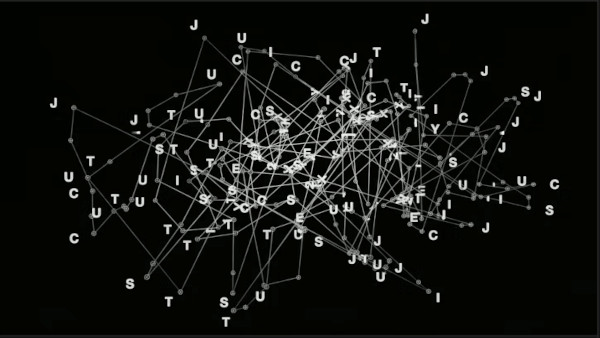
An illustration of data points that resemble a sky full of stars and constellations, merging to form the letters of the word “justice” in different configurations. Sourced from: Unsplash/Image by Resource Database. Original image was modified by the author using Artlist.
What intrigued me about the above-mentioned “justice gap,” presented as a signifier for the “justice crisis,” was that the above- mentioned data collection on the “justice gap” by the World Justice Project did not solely measure access to justice, building on institutional data from national judiciaries, but framed it more broadly to include how “the demand for justice is fulfilled in a more multifaceted manner” (World Justice Project 2019, 4). This framing was broader as to include “informal,” “customary” and “traditional” justice mechanisms, particularly from countries in the so-called Global South. It departed from earlier attempts by international organizations to measure the exclusion from the rule of law (see Rule of Law Index by the World Justice Project), but rather aimed at “localizing” justice solutions. In addition, particularly in African countries such as Kenya, multilateral organizations such as the World Bank have introduced universal access to justice assessment systems, such as the programme JUPITER (which ironically draws on Roman mythology within which Jupiter was the God of all gods and thus having supreme power). This programme collects data on access to justice through electronic case management systems and e-filing systems which “has led to the creation of massive databases that track every characteristic of each case” (Ramos-Maqueda and Chen 2025).
I wondered: Can this wider understanding of justice, which is related to legal pluralism in anthropology as it emphasized that multiple normative orders de-facto coexist and overlap in colonial and postcolonial contexts (Foblets et al. 2022, 10), potentially lead to better access to justice for all? And can this data potentially also inform the production of (new) technologies, such as Artificial Intelligence? Since data sets form the foundation of AI, the types of data collected on justice processes become critical in informing the normative shaping of what justice means, a framing that both underpins AI systems and is, in turn, (generatively) reshaped through them.
It is not new that technologies are often said to fill gaps and “leapfrog” development (e.g. Neumark and Prince 2021). Under headers, such as “tech the justice gap,” digital technologies are increasingly seen as a way to transform how justice is made accessible but also as a way to (re)imagine justice both normatively and morally. Therefore, the deployment of various forms of AI, continues with a “tradition” of techno-optimism and developmentalism widely discussed in anthropology and STS (e.g. Donovan and Park 2022). Besides other forms of digital innovation in the justice sector, AI is increasingly framed as a tool to address, or perhaps circumvent, corrupt, under-resourced, and politically strained justice systems in many African countries:, systems that are said to have contributed to massive case backlogs and unequal access to justice.
In Kenya, the landscape of digital innovation in the legal sphere is rapidly expanding. Alongside a growing number of private LawTech firms such as Lawlyfy, the Kenyan Judiciary is currently developing an Artificial Intelligence Adoption Policy Framework intended to support the use of AI for transcription, legal research, and predictive analytics (The Judiciary 2025). Beyond legal institutions within the more formal justice system, digital technologies and AI have also been mobilized within broader struggles for social justice. The 2024 Gen Z protests showcased Kenyans’ creativity and technological fluency in leveraging digital tools for political mobilization, public accountability, and civic engagement (Nyakundi and Orembo 2024; see also Nyabola 2018). It was therefore perhaps unsurprising that, by July 2025, Kenyans were reported to be the top global users of ChatGPT (DataReportal 2025; Mwangi 2025).
The notions of the “justice gap” and the ensuing “justice crisis” are concerns shared across the different actors discussed in this contribution, including international organizations, government institutions, legal practitioners, civil society, activists, and common wananchi (lit. ‘ordinary citizens’ in Kiswahili). In the context of humanitarian crises, Gathara (2024) observes that crisis reporting often constructs a false binary between Western competence and non-Western precarity, with little interrogation of the structural causes of such precarity. In line with this critique, de Vries (2024, 3) argues that the persistent framing of Africa as “a place of theoretical scarcity” underpins the idea that external actors must supply concepts, theories, and solutions. This narrative, she warns, legitimizes the imposition of external ethical and epistemic frameworks onto African contexts.
Yet, as the writer Yvonne Adhiambo Owuor reflected recently, “to be Kenyan right now, is to be in a place of uncertainty. To be human is to be uncertain right now.” She invites Kenyans to imagine otherwise: “Look for the kind of story we want for ourselves. What kind of world do we want for ourselves? (…) It is not a policy question. It is a dream question. It is a question that comes from the place of imagination. Do we imagine ourselves (…) riding in the stars?”[1] . As Anye Nyamnjoh reminded us in the workshop on Feminist African AI at the ETHOS Lab in May 2025, the question should be who participates in making the world (Nyamnjoh 2025). Thus, when thinking about how to define and close the “justice gap” in order to “treat” the “justice crisis,” the key question becomes: How are “desirable futures” (Nyamnjoh 2025) imagined and shaped, and by whom?
Note
[1] SpiceFM “Yvonne Adhiambo| Diversifying Perspectives – Reclaiming Africa’s Narrative.” October 21, 2025. https://www.youtube.com/watch?v=837WuIMiCq8
This post was curated by Contributing Editor Samiksha Bhan and reviewed by Contributing Editor Aisha Chughtai.
References
Bens, Jonas, and Larissa Vetters. 2025. “Moving beyond and towards Liberal Legalism: Legal Anthropology and the Liberal Rule of Law.” Ethnoscripts 27 (1).
DataReportal. 2025. “Digital 2025 – July Global Statshot Report.” https://datareportal.com/reports/digital-2025-july-global-statshotde Vries, Jantina. 2024. “Centering Africa as context and driver for Global Health Ethics: incompleteness, conviviality and the limits of Ubuntu.” Wellcome Open Research.
Donovan, Kevin P., and Emma Park. 2022. “Algorithmic Intimacy: The Data Economy of Predatory Inclusion in Kenya.” Social Anthropology/Anthropologie Sociale. Social Anthropology/Anthropologie Sociale 30 (2): 120–39.
Foblets, Marie-Claire, Mark Goodale, Maria Sapignoli, and Olaf Zenker, eds. 2022. The Oxford Handbook of Law and Anthropology. Oxford: Oxford University Press.
Gathara, Patrick. 2024. “Decolonise How? | The crisis is always past: An appreciation of history is necessary to understanding today’s and future humanitarian crises.” The New Humanitarian. https://www.thenewhumanitarian.org/column/2024/11/20/decolonise-how-crisis-always-past-berlin-west-africa-conference-scramble-for-africaMwangi, Kabui. 2025. “Kenyans top global rankings for ChatGPT use.” Business Daily, July 25. https://www.businessdailyafrica.com/bd/corporate/technology/kenyans-top-global-rankings-for-chatgpt-use-5131796 Neumark, Tom, and Ruth J. Prince. 2021. “Digital Health in East Africa: Innovation, Experimentation and the Market.” Global Policy 12 (S6): 65–74.
Nyabola, Nanjala. 2018. Digital Democracy, Analogue Politics: How the Internet Era Is Transforming Politics in Kenya. London: Zed Books.
Nyakundi, Diana Kemunto, and Liz Orembo. 2024. “Redefining AI for Africa: The Role of Artificial Intelligence in Kenya’s Grassroots Movement.” https://www.techpolicy.press/redefining-ai-for-africa-the-role-of-artificial-intelligence-in-kenyas-grassroots-movementNyamnjoh, Anye. 2025. Keynote at Workshop on African feminist AI at the ETHOS Lab, organized by Alena Thiel.
Ramos-Maqueda, Manuel, and Daniel L. Chen. 2025. “The data revolution in justice.” World Development 186. https://doi.org/10.1016/j.worlddev.2024.106834Roitman, Janet. 2014. Anti-Crisis. London and Durham: Duke University Press.
The Judiciary. 2025. “Judiciary to leverage AI to enhance justice.” Kenyan Judiciary Website. https://judiciary.go.ke/judiciary-to-leverage-ai-to-enhance-justice/ World Justice Project. 2019. “Measuring the Justice Gap: A People-Centered Assessment of Unmet Justice Needs Around the World.”
