Author Archives: Jonathan Givan

I am a PhD student in Science and Technology Studies at RPI. My work looks at the intersection of race, music, technology, and culture by exploring the relationship between Black Hip Hop producers and the Akai Midi Production Center

Hip Hop Sampling and the Akai MPC as a Platform for Spatiotemporal Discourse

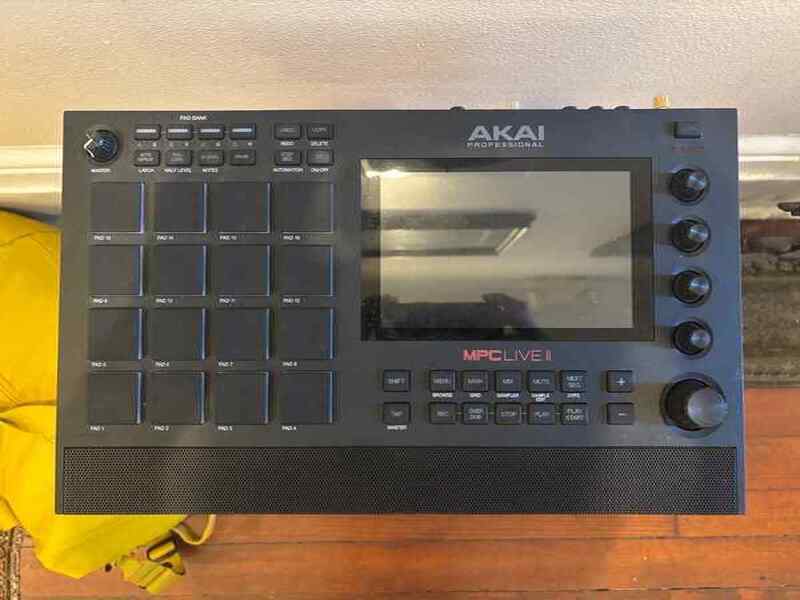
The Akai Music Production Center (MPC, formerly known as the MIDI Production Center) is a series of sequencers/samplers/interfaces first designed by Roger Linn and released in 1988 to critical acclaim. The MPC series soon became one of the most influential technologies in modern music production. The flagship model, the MPC60, included many features that made it an immediate hit with artists: a 4 by 4 layout of comfortable pressure sensitive pads, 16 voice polyphony, 13.1 seconds of sampling, frequency response of 18kHz, and MIDI (an acronym for musical instrument digital interface, a protocol that allows electronic instruments to communicate with each other). These feature allowed for easy connectivity to other MIDI devices found in studios at the time like synthesizers and other samplers, high quality sampling and playback, and an instrument that feels good to play. (read more...)

A black Akai MPC Live II (Image by Author). This is a MIDI Sequencer. MIDI is a file format and technical standard that lets electronic instruments from different manufacturers communicate with each other. A MIDI sequencer is used by artists to record, edit, and play MIDI sequences.

Being Heard as Experimental

Hip Hop is a musical genre and cultural movement that has been the birthplace of ingenious creativity and novel methods of music making that incorporate new and old technologies (Driscoll 2009). These technical innovations can be seen in the redeployment (Fouché 2006, p. 642) of the turntable through moving the record backwards and forwards to generate new sonic textures and generate hypnotic repetition through breakbeats. The MIDI Production Center (MPC) by Akai and Roger Linn—a MIDI sequencer, sampler, and drum machine that was initially designed to give musicians and producers an easier way to create more natural sounding drums in their recorded music—was almost immediately taken up by Black Hip Hop producers in the United States and used to sample longer pieces of audio from a variety of sources and then re- sequence them to create new melodies and drum rhythms. However, the histories of marginalized people’s exploration of new sounds and technologies for the sake of creative music making seems to largely diverge from the histories of what is traditionally labeled experimental music within the western musical canon. In this post, I want to explore histories of experimental music and contrast it with histories of Hip Hop to better understand who is allowed to be labeled as experimenting within music and how the answers to these questions exist along particular lines of race, space, and time. (read more...)