On October 16th, 2024, I found myself unemployed. While some say unemployment can be a time to relax and catch up on sleep, this really wasn’t the case. My unemployment became a conditional liminal space, between stable pay that was without an expiration date (Odoardi et al. 2022).
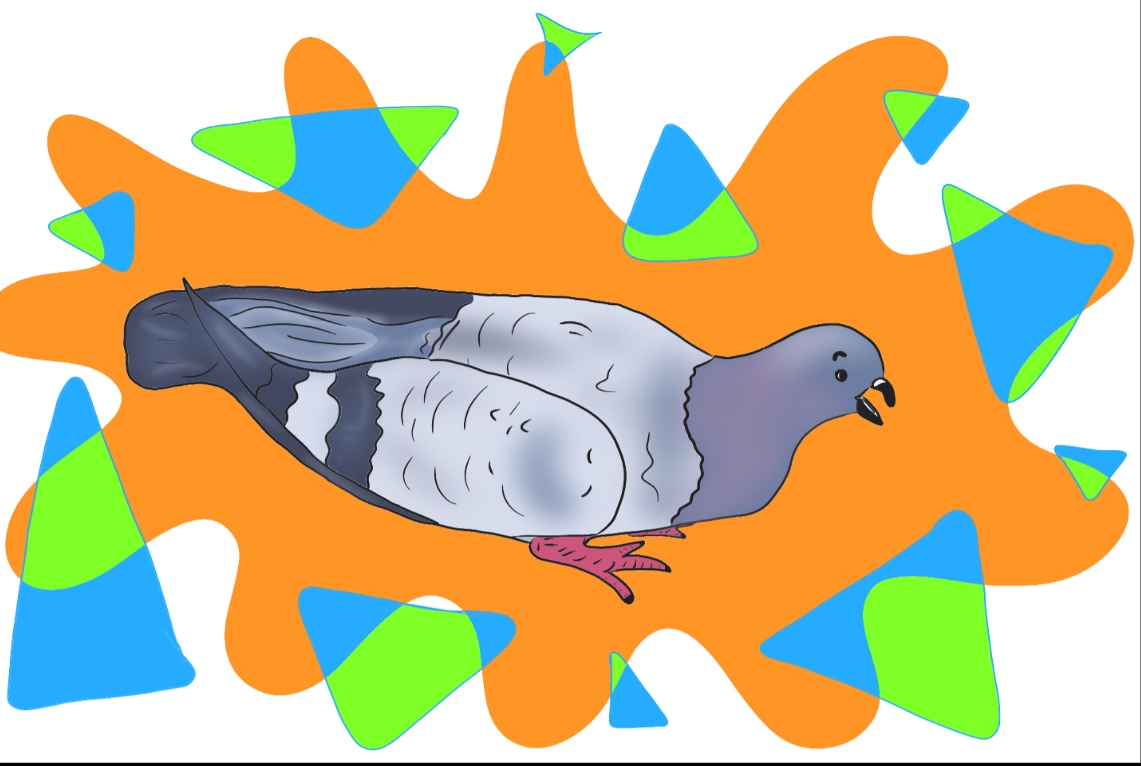
What unemployment as a liminal space feels like. Drawing by author.
My boyfriend at the time had been unemployed for over 4 years. As a social scientist, I found this perplexing, and as a girlfriend, it gave me chest pain. After some research, it turned out this phenomenon had many names and variations, from ‘lying flat’ (Pan 2026), NEET (Not in Education, Employment, or Training) (Odoardi et al. 2022), to “stay-at-home boyfriend.” This is kind of a new role reversal from young US workers that differs from previous family work arrangements of the past. We were living in Austin and the surrounding areas, in areas where younger people tended to live and a very visible NEET population. By 2026, women outnumbered men in the workforce (Gioino 2026). Back in 2024, this was my nightmare – my thirty-year old boyfriend was lying flat (intentional pun) and as much as I tried, I could only get part-time jobs.
When I asked why my then boyfriend wouldn’t get a job? he would say, “Because I don’t want them treating me like shit.” While we were both unemployed, I found our situations to be different. Generalized unemployment is also gendered. Men’s long-term unemployment can be characterized by disempowerment and emasculation (Willott & Griffin 1997). It didn’t seem to occur to him that this excuse made me the unwitting breadwinner. He would lie and say he applied for jobs; unemployment was a taboo subject for him. In contrast, I talked openly about my unemployment and was optimistic that I would find a better company than my last one.
However, at times my optimism faltered. My unemployment seeped beyond 9 am to 5pm. Grocery store checkouts, talking on the phone with my mom, and meeting strangers who inevitably ask the question, “So, what do you do?” These would remind me that my capitalist and patriarchal society is closely tied to my employment status and bleeds into my personal relationships. My precarious state has evolved into a greater liminal presence called ambient violence. Ambient violence is defined by Docot as past continual exploitation that has been normalized (Docot 2026). The ambient violence that results from liminal unemployment draws from a history of exploitation and a lack of workers’ rights, where healthcare, food access, and housing are tied to employment that can end at a minute’s notice.
My ambient violence liminality increased the gender disparity of unemployment; my former boyfriend felt dehumanized and would hide his unemployment from his friends to avoid low social approval. Sometimes it appeared to the point of infantilization because he didn’t provide for anyone, refusing to even get a consistent part-time job; instead, he would occasionally deliver food on his bicycle. (Plank 2024). On the other side of this disparity, as a woman, I found that the problem was not as much about the status of unemployment but about overcoming barriers to employment. I was worried about problems like gender bias, a comparatively lower salary, and a stall in progress toward closing the gender wage gap (Lau et al. 2022). However, I couldn’t even get interviews because of these problems. My sister would point out that my then-boyfriend could get a job quicker than me if he wanted to because hiring has gender bias. Even NEETs have gender discrepancies, apparently; GDP per capita is negatively correlated with the probability of being NEET, and the decrease for women is 4% stronger for this correlation (Odoardi et al. 2022). Growing GDP signals differently. However, some speculate that the US’s GDP did not grow in 2026 without AI investment spending (e.g., Atlantic Council 2026, Jim 2025). So, does this count if very few jobs are created while fanning the smoke of AI? I am increasingly worried about future work if companies were dumping billions into replacing several sectors of the economy.
Anyway, despite all that, I was determined to be unemployed for only a couple of months. I had a part-time job while I applied to as many jobs as I was qualified for on several job platforms. I applied on the popular ones like LinkedIn, Indeed, and smaller search engines like HiringCafe. I went to job fairs when available and asked old coworkers, friends, and family if they knew of any open positions. I quickly found that these job boards were oversaturated. Hundreds of people would apply to positions within a couple of hours of them being posted. I pivoted to my university‘s hiring platform access, but those were mostly low-paying entry-level sales jobs, not very many for workers with 3 years of experience. I applied for hundreds of jobs over the first six months of unemployment.
I also found that most job search advice became quickly outdated. “Just apply on LinkedIn or on a website.” This probably would have worked in 2013; however, by 2024, the links I clicked on companies’ websites were stale and old. It was common for hiring managers to forget to take down the job post. These stale or fake job postings are commonly called ‘ghost jobs.’ Ghost jobs are job ads posted for job positions that don’t exist or have no intention of filling the position. The ads themselves make companies appear like they are growing, while the applications mine the personal data of applicants (Grimm 2025). So many job postings didn’t respond, or I got rejected several months later. Recruiters had months-long waitlists for temporary contract roles.
At this point, multiple people recommended using ChatGPT; however, every other job seeker was also using products like this to create cover letters and rewrite resumes. The playing field changed so quickly it didn’t really provide an advantage. I also used ChatGPT to review my resume for a job posting. I input my resume and queried what roles I could apply for and how to find roles like those, but many of them were stale links or ghost jobs. I tried using it for cover letters, and even queried it, “Am I qualified for this job?” The output I received was not helpful. LLMs (especially back in May 2025) did not have the capability to compare soft skills to each other, and many find that the interface is sycophantic or overly agreeable (Fetzer 2026). This ultimately was a waste of time for me.
Wasting time with ChatGPT felt like the definition of insanity. I kept making similar cover letters with it and creating similar Workday accounts for different companies to submit almost the same resume. It felt like I was doing the same things repeatedly and expecting the same results. Some people write LLM commands for automatic resume screeners; however, these had mixed results and don’t guarantee an interview (Gorelick 2025). In September 2025, I broke up with my boyfriend, who ended up getting a job after six weeks of searching. I moved to Houston.
All the tactics I used surely are not how people get jobs. I would see articles about how a manager would submit their own resume and their application tracking system would auto-reject it (Patel 2024). Even more concerning, the Department of Labor has been constantly revising the number of jobs added to the economy from a month prior, and the most recent revision showed that their original estimate was off by 911,000 openings (Aspan et. al. 2025). Also, this was a gendered problem, as application tracking systems have a bias against women (Zeala 2025).
How can an AI resume scanner have a bias toward women, while women are simultaneously surpassing the number of men in the workforce?
In early October 2025, I did get a job a couple of days shy of my first anniversary of unemployment. And I didn’t use the internet; it came from a different type of network – my family. In fact, a family friend sent me a job posting for a logistics and supply chain administrative assistant in a contract-to-hire role. I started on November 3rd, and four months later I accepted a full-time role as a supply chain distribution planner and analyst. I thought I was through using AI tools. The finance advisor at my new company trained us to use Claude AI. Even in manufacturing, somehow the “unlimited” use cases of AI would prevail, somehow… but it needs to be in the form of a spreadsheet, and several APIs need to be connected. And the inputs need to resemble an email to a clueless intern.
AI has widened the liminal space of unemployment, and the “limitless” capability of AI job-seeking tools has also exploded. Using AI job tools felt like putting out a fire with a bucket of fire. I was trying to use a ChatGPT-edited cover letter in an ATP application system, in the hopes of getting a video prompt interview that would eventually lead to seeing a real person. Using a chatbot to apply to a screening system to get a video interview that would measure my eye contact and pauses. This “powerful” tool has effectively erased a way to showcase interpersonal skills and other desirable workplace soft skills.
Unemployment creates a liminal space, with average unemployment time increasing since 2023 (Average Weeks Unemployed). This creates more precarity yet remains hidden behind “AI opportunity”. Thus, this precarity manifests in ambient violence that ebbs into public liminal spaces.

The Backrooms, an internet-born depiction of an uncanny, endless in-between space, provide a visual metaphor for the experience of being stuck in the liminal space of unemployment. [Photo credit: Wikimedia Commons].
Looking back on how I clawed my way out of liminal backrooms-esque unemployment was how much I learned about modern hiring. I found that the path is fraught with gendered disparity and amplified by the ambient violence of hiring practices and the new adoption of AI screening and interview practices. Seeking employment has always been gendered; however, it’s now increasingly being done by gender-biased computers, the future of work is contract and temporary, and networking is increasingly moving offline.
Overall, the best piece of technology for job hunting for me was growing a face-to-face social network and using Google Maps. With my network, I joined a run club which had people of all ages and job levels. With Google Maps, I searched for businesses block by block in an area near my house, then clicked on their website’s job boards. Using this technique, I got an interview and an offer.
I leave you with this:
Dear Future employers:
Post jobs locally using local job boards, participate at job fairs, and use trained humans to read resumes.
Sincerely,
Anna
This post was curated by Contributing Editor Sameeha Vardhan and reviewed by Contributing Editor Ritu Ghosh
References
Aspan, Maria, Scott Horsley, and Danielle Kurtzleben. 2025. “BLS Revision Shows Annual Hiring Was Overstated by 911,000 Jobs.” Economy. NPR, September 9. https://www.npr.org/2025/09/09/nxs1-5527000/bls-us-job-growth-numbers-revised.
Atlantic Council, dir. 2026. AI, Supply Chains, and Trade Resets: The Global Economy in 2026. 46:10. https://www.youtube.com/watch?v=zZHN0-ZNe_4.
“Average Weeks Unemployed.” 2026. August 7. https://fred.stlouisfed.org/series/UEMPMEAN.
Docot, Dada. n.d. Town of Dollars. Accessed September 2, 2026. https://uwapress.uw.edu /book/9780295754703/town-of-dollars/.
Edwards, Jim. 2025. “A Huge Chunk of U.S. GDP Growth Is Being Kept Alive by AI Spending ‘with No Guaranteed Return,’ Deutsche Bank Says.” Fortune. https://fortune.com/2025/12/23/us-gdp-alive-by-aicapex/.
Fetzer. 2026. “AI-Powered Chatbots Can Become Too Agreeable over Time, Researchers Report | Penn State University.” March 18. https://www.psu.edu/news/information-sciences-and-technology/story/aipowered-chatbots-can-become-too-agreeable-over-time.
Gioino, Catherina. n.d. “For the Third Time in History, Women Outnumber Men in the Workforce as the Stay-at-Home Boyfriend Becomes an Economic Trend.” Fortune. Accessed September 2, 2026. https://fortune.com/article/why-are-men-leaving-the-workforce-more-women-outnumber/.
Gorelick, Evan. 2025. “Recruiters Use A.I. to Scan Résumés. Applicants Are Trying to Trick It.” Business. The New York Times, October 7. https://www.nytimes.com/2025/10/07/business/ai-chatbot-promptsresumes.html.
Grimm, Daniel J. 2025. “Ghost Jobs.” Columbia Law Review 125 (7): 183–204.
Lau, Vienne W., Veronica L. Scott, Meg A. Warren, and Michelle C. Bligh. 2023. “Moving from Problems to Solutions: A Review of Gender Equality Interventions at Work Using an Ecological Systems Approach.” Journal of Organizational Behavior 44 (2): 399–419. https://doi.org/10.1002/job.2654.
Odoardi, Iacopo, Dario D’Ingiullo, and Davide Quaglione. 2023. “Gender Disparities between Young and Adult NEETs: Do We Need a More Refined Policy Approach?” Applied Economics 55 (56): 6685–99. https://doi.org/10.1080/00036846.2022.2161991.
Pan, Jiawei, and Pei-Luen Patrick Rau. 2026. “Looking into Workplace Lying Flat: Understanding Underlying Causes and Providing Intervention Measures.” Current Psychology 45 (3): 225. https://doi.org/10.1007/s12144-025-08813-9.
Patel, Vinay. 2024. “‘Lazy and Mediocre’ HR Team Fired After Manager’s Own CV Gets Auto-Rejected in Seconds, Exposing System Failure.” International Business Times UK, September 27. https://www.ibtimes.co.uk/lazy-mediocre-hr-team-fired-after-managers-own-cv-gets-auto-rejectedseconds-exposing-system-1727202.
Plank, Lesego Linda. 2024. “‘The Undesirables’: Black Middle-Class Women Versus Unemployed Men.” In Love in Jozi: The Black Middle Class, Love and Intimacy in Johannesburg, 1st ed., edited by Grace Khunou. UJ Press. https://doi.org/10.36615/9780906785324-03.
Willott, Sara, and Christine Griffin. 1997. “`Wham Bam, Am I a Man?’: Unemployed Men Talk about Masculinities.” Feminism & Psychology 7 (1): 107–28. https://doi.org/10.1177/0959353597071012.
Zeala, Pinto. 2025. “INVISIBLE FILTERS: HOW DIGITAL AND HUMAN BIAS SHAPE WOMEN’S JOB SEARCH IN HIGH-TECH. EXPLORING ORGANIZATIONAL GATEKEEPING, AI TOOLS, AND THE GENDERED HIRING EXPERIENCE IN THE DIGITAL AGE.” In EU Digital Strategy: Governance, Innovation and Business. Editura Universităţii »Alexandru Ioan Cuza« din Iaşi. https://www.ceeol.com/search/chapter-detail?id=1397067.
