Released theatrically late last month, Backrooms, the latest horror film from A24, is a bona fide blockbuster. The film grossed $81 million domestically and $118 million internationally in its first three days, making it by far the studio’s most successful opening weekend, more than tripling its previous record set by 2024’s Civil War. Within its first week, users on the film-based social media site Letterboxd had collectively logged over half a million viewings.
On paper, Backrooms’ success is easily explained: horror is nearing a decade-long box office renaissance, one of the few remaining genres which is reliably profitable. It stars charismatic, recognizable, Academy-Award-nominated actors Renate Reinsve (Sentimental Value, The Worst Person in the World) and Chiwetel Ejiofor (Doctor Strange, 12 Years a Slave). It has production backing by franchise legend James Wan of Saw and The Conjuring fame. But for many of the young people showing up in droves to this movie, these traditional markers of Hollywood quality likely miss the point-at best incidental to, and at worst a distraction from, what makes Backrooms exciting.
For Gen Z and Gen Alpha film-goers, the appeal of Backrooms has nothing to do with individual stars or legacy IP. Instead, the draw is twofold: 1) the film’s wunderkind 20-year-old director Kane Parsons (also known by his YouTube username Kane Pixels, now officially the youngest filmmaker to have a #1 opening weekend debut), and 2) the mythos behind the Backrooms, a sprawling, decentralized piece of participatory Internet folklore to which Parsons is simply the best known among thousands of contributors.
Other franchises may inspire or invite fan art, fan theories, and fan fiction. But for Backrooms, this kind of participation is not incidental to the product; it is constitutive of it. Even for anthros who normally have no truck with narrative film in general, or who assiduously avoid horror in particular, we argue that the Backrooms phenomenon’s remarkable resonance with young audiences, its unique origin story, and its productive blurring of the online, fictional, and physical worlds merits consideration for scholars of media, communication, and the present moment in general. Rarely in recent memory has blockbuster US cinema felt so tapped in to what it feels like to be alive right now, make it excellent fodder for what Paul Rabinow (2007) identified as the field’s ability to develop an “anthropology of the contemporary.”
4Chan Goes Hollywood: A Beginner’s Guide to the Backrooms

Figure 1. The original source for the Backrooms 4chan image was traced to a furniture store in Oshkosh, Wisconsin, a detail nodded to as an Easter egg in the screenplay for the film. Courtesy Wikimedia Commons.
With due consideration to spoilers, the basic premise of the film is this: A down-on-his-luck furniture salesman in 1990s Silicon Valley (Ejiofor) discovers a bizarre pocket universe in the basement of his showroom. Things are further complicated when his therapist (Reinsve) follows him inside.
But Backrooms (2026) is just the most recent, polished, and institutionally sanctioned container for the Backrooms story. The original source material is something incalculably less glamorous, a post on 4chan.org- the mainly anonymous forum that gave rise to countless memes as well as more malignant forces like QAnon and the alt-right- itself a kind of a kind of backroom of the Internet. Specifically, the saga began as a piece of ‘creepypasta’- a form of Internet horror storytelling in which blocks of text are repeatedly copied and pasted by different users. Briefly charting Backrooms’ path from shut-in ignominy to Hollywood glitz is worthwhile for orienting the unfamiliar reader, and for shedding light on what makes this such an unusual blockbuster.
In May 2019, an anonymous user on 4chan’s /x/ discussion board (the page reserved for paranormal topics) began a thread inviting repliers to “post disquieting images that just feel ‘off’,” with an accompanying photo of what looks like an empty office building or apartment with pale yellow wallpaper and uninviting fluorescent lights (Figure 1). One reply to OP’s photo read:
If you’re not careful and you noclip out of reality in the wrong areas, you’ll end up in the Backrooms, where it’s nothing but the stink of old moist carpet, the madness of mono-yellow, the endless background noise of fluorescent lights at maximum hum-buzz, and approximately six hundred million square miles of randomly segmented empty rooms to be trapped in
God save you if you hear something wandering around nearby, because it sure as hell has heard you
This is the first recorded mention of the Backrooms— an entirely enclosed indoor area with a footprint roughly 200 times the size of the continental United States, an impossible, nonsensical object that invokes incomprehensibility, indifference to humanity, unknowable spaces and unclassifiable creatures. Typical of the Internet, it is highly original yet full of obvious reference points, an uncredited mishmash of old and new, high and low brow: HP Lovecraft’s short stories and Mark Danielewski’s House of Leaves seem as likely influences here as do The Stanley Parable or Portal (The word ‘noclipping’ is a neologism from video games, referring to glitches in which a character passes through surfaces that should be physically impossible). The post also features, characteristically, a profound but unacknowledged co-authorship: the OP’s image and the replier’s text, which are now inextricably paired, were provided by different anonymous users— a detail missed in many explainer articles published in the wake of the film’s release.
Clearly, something in the image, the caption, and the pairing of the two resonated with people. Within days, a subreddit dedicated to this new fictional world, r/Backrooms, sprung up, as well as a fandom wiki through which users collaboratively created elaborate lore. Over the next few years, these two sites became vibrant hubs of a dedicated Backrooms fandom, with the community building out an elaborate backstory to explain the existence of the Backrooms, spinning out the imagined physical structure to include hundreds of vertical floors each with their own characteristics and a detailed timeline beginning with the birth of the universe.
Parsons’ own contribution to the saga did not come until 2022, when he made an original series of YouTube videos inspired by the mythos. Across 22 episodes, all rendered by then-sixteen-year-old Parsons with the open-source special effects software Blender, the YouTube series both expanded and radically simplified the Backrooms, replacing the community wiki’s vast catalog of monsters with “still lifes” and “life forms” and doing away with the hundreds of levels, while expanding the lore with a series of disjointed found footage dispatches, offering fans new clues and theories to dive into.
Parsons has talked at length during the press tour for the film about how his own Discord channel has become a kind of distributed workforce, where fans use their talent and free time to lovingly render new ideas in Blender, the same free software he uses to create the series. This is a collective form of art that blends group chats, YouTube, TikTok, books, forum posts, and traditional studio-based Hollywood film-making is simply the container for it, the linchpin temporarily holding it altogether.
Movies for Dead Shopping Malls: Anthropology and Film-Going in a Midwest Suburb
Anthropology has long benefited from taking narrative cinema seriously. Beginning with Hortense Powdermaker’s Hollywood, The Dream Factory: An Anthropologist Looks at the Movie-Makers (1950), the field has unevenly but persistently recognized that physical centers of culture-industrial production are worthy ethnographic sites. In more recent years, fascinating emic accounts have described the latest twists and turns in the ongoing tension between the art of filmmaking and the business of movie production (Obst, 2023).
For those without such rarified access, a more reliable form of inquiry involves simply viewing feature films as cultural objects (Weakland, 2009) and participant-observing in cultures of filmgoing wherever they are found (see Krasniewicz, 2006). For us, this meant going together at the Galleria, a large shopping mall in the Richmond Heights suburb of St. Louis, Missouri, constructed in 1984. The Galleria felt like a particularly suitable place to see Backrooms- it was labyrinthine, sterile, warm-toned, and a little unsettling (Figure 2). We were not alone in making this connection, and since the film’s debut social media has been full of film-goers sharing similar photos of the eerie, liminal, mostly empty, corporate settings in which they saw the film.
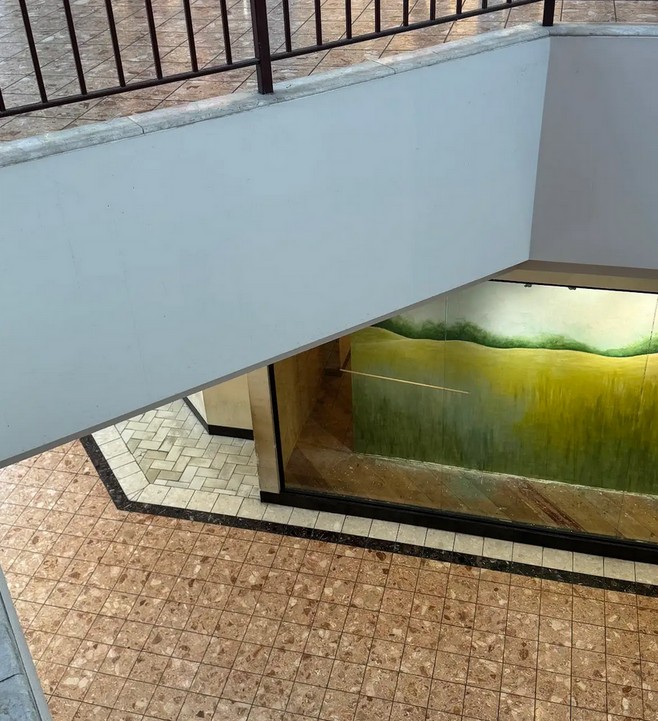
Figure 2. The Saint Louis Galleria was built in the 1980s and continues to generate diminished but steady foot traffic. Photo by Aaron Neiman 2026.
The theater experience itself was also Backroomsian. Despite the film doing good business in aggregate, moviegoing is now a shadow of its former self and has become less a site of collective undivided attention than a setting for other activities and cool, dark place to fall into other screens. Like many places now, everything seemed understaffed: empty but not closed, uncanny but not abandoned. Public spaces today are full of physical reminders of the relative unimportance of being together and of cinema in particular. The screen was visibly worn, the emergency lights on the ceiling flickered intermittently, and some younger members of the audience seemed restless and distracted.
As avid Internet users of the 2010s (both having spent more of our teenage years on 4chan than we care to admit), we were both intimately familiar with the aesthetic fascination with “liminal spaces” and “hauntology,” concepts borrowed from academia to describe the uncanny feelings inspired by living among capitalist ruins, physical monuments that long outlast the economic regimes they are monuments towards. The salience of Vaporwave—the meme genre of chopped-up samples from 1980s pop songs and TV commercials famously described as “music for dead shopping malls”—was not lost on us as we wandered back to our cars through the enclosed, mostly empty space.
For millennials like the two of us, this fascination with post-apocalyptic liminality was always a bit of a novelty, an ironic “aesthetic” that tended to overstate the actual degree of ruination and in hindsight reads as a kind of dress rehearsal for the brutal and shocking 20s. For the filmmakers and film-goers coming of age amid pandemics, genocide, and AI, making and experiencing art in and for lonely, frightening, confusing landscapes indifferent to human being are not thought just fun hypotheticals, they are a necessary feature of their generational inheritance.
Conclusion: Backrooms’ Horror of the Contemporary
Paul Rabinow defined the contemporary as a discourse about the recent past and near future, an ever-changing “ratio” of traditional and modern by which both are made historical (2007: 2). Playfully shuffling around these temporalities is characteristic of the key texts in the emerging new canon of horror movies from young filmmakers: Jane Schoenbrun’s We’re All Going to the World’s Fair (2021), despite its fin-de-siècle title, depicts an internet-based horror challenge not unlike the online community that spawned the Backrooms saga. Kyle Edward Ball’s Skinnamarink (2022) borrows its name from an early 1900s nursery rhyme but takes place in 1995 and is steeped in the fuzzy, pixelated aesthetics of cathode ray tube TVs and home digital video cameras.
Backrooms similarly plays with these ratios, but heightens the contradictions: it takes place at the exact time and place of the birth of the tech boom, an extraordinarily consequential moment that the filmmaker was not alive to remember. Parsons is proof that there is a new generation of filmmakers for whom movies about the computer and internet ages are always also period pieces, even if they take place in the present or in no time in particular.
For an anthropology of the contemporary, this is a valuable resource: a steady stream of new visual art, commercially successful or not, that helps us historicize in real time by giving young people the chance to commit their feelings to film before too much time has passed. That at least one of these new voices is this gifted — and that these stories might keep theater-going alive in the age of AI — are reasons to cheer.
This post was curated by contributing editor Aaron Neiman with help from Melina Campos Ortiz.
References
Krasniewicz, Louise. 2006. “Round up the Usual Suspects.” Anthropology Goes to the Movies. Expedition 48 (1): 8–14.
Obst, Lynda. 2014. Sleepless in Hollywood: Tales from the New Abnormal in the Movie Business. Reprint edition. Simon & Schuster.
Powdermaker, H. (2013). Hollywood, the Dream Factory: An Anthropologist Looks at the Movie-Makers (Illustrated edition). Martino Fine Books.
Weakland, J. H. (2009). Feature Films as Cultural Documents. In Feature Films as Cultural Documents (pp. 45–68). De Gruyter Mouton. https://doi.org/10.1515/9783110221138.45

.jpg)