Outbreak mitigation always operates within a tension between technical expertise (lo técnico) and political imperatives (lo político). My conversations with epidemiologists in Guatemala over the past twenty-eight years have taught me that this dichotomy places a strain in their daily work that reaches its highest intensity during an outbreak. The essence of this challenge lies in what one seeks to mitigate. The technical prioritizes disease and its effects on population health while the political, in contrast, prioritizes certain social, economic, or political consequences of the epidemic’s spread. In their accounts of outbreaks, several of these epidemiologists have invoked the figure of John Snow, the English physician who in the nineteenth century investigated the causes of several cholera epidemics in London. I argue that Snow functions here not simply as a historical reference, but as a modern myth, one that offers clues for understanding how epidemiologists make sense of the persistent tension between technical expertise and political authority, especially when performing the work of mitigating outbreaks. Below I present examples of this dichotomy and references to Snow, whom I then analyze as a modern myth that offers clues for understanding the place of epidemiology in contemporary society.
I first encountered this tension between expertise and political authority in 1998, when technical actions were at times obstructed by the political-administrative priorities of the local health district director. At the time, I participated as a medical student in controlling cholera and malaria outbreaks along the South Coast of Guatemala in the aftermath of Hurricane Mitch. In 2001, working as an ambulatory physician in the mountainous region of Alta Verapaz, my supervisors in the Ministry of Health, with political interests, mishandled my report of cutaneous Leishmaniasis to prevent doubts on a new government health program. In 2004, in the Bocacosta of Sololá, the investigation of a rotavirus outbreak was handled with secrecy because local authorities did not want the community’s water treatment system called into question. Later, in 2020, while supporting community efforts to address COVID-19, some Ministry of Health epidemiologists told me that, although they had a clear grasp of the necessary technical measures, they could not share them until they were reviewed by the political hierarchy and the Presidency, which delayed the publication of guidelines for the community by several weeks.
Beyond those experiences, several epidemiologists that I interviewed between 2009 and 2013 as part of an ethnographic study on epidemiological practices in Guatemala (Cerón 2018; Cerón 2019), mentioned John Snow when they offered anecdotes to show this tension at play. John Snow is routinely celebrated as the “father of modern epidemiology,” a status grounded in a now-canonical narrative that presents him as a heroic figure whose empirical rigor decisively transformed medical knowledge (Lilienfeld 1978; Susser & Bresnahan 2001; Vandenbroucke 2001). In its mythic version, the story centers on ten days in the summer of 1854, when a cholera outbreak in London’ Soho neighborhood claimed around five hundred lives. Snow mapped the deaths, identified the Broad Street water pump as the source of contamination, persuaded the local Board of Guardians to disable it by removing its handle, and thus brought the epidemic to an abrupt end. This demonstrated that cholera was transmitted through contaminated water and precipitated the abandonment of miasmatic theories.
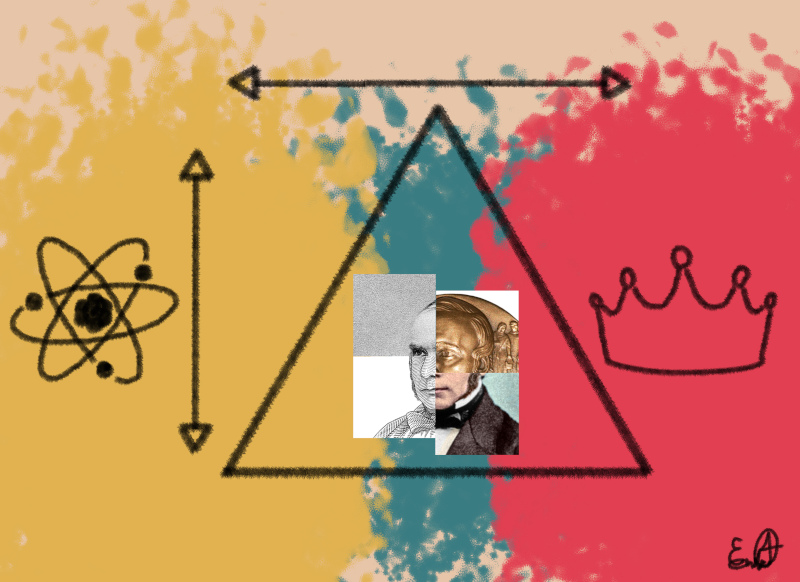
The technical and the political: the myth of John Snow. Image credit: Emilio Ceron-Fort. Used with permission by the author.
Historical research, however, reveals a more complex picture (Daniel 2004; Hempel 2007; Johnson 2007; McLeod 2000; Paneth et al. 1998; Pelling 2022; Vinten-Johansen et al. 2003). Snow had been working on cholera for nearly fifteen years before 1854. The identification of the pump was not a solitary discovery but depended on the contributions of public officials, clergy, and community members. His contemporaries regarded him as a minor medical figure (Pelling 2022). The intellectual shift from miasmatic to germ theories developed gradually in the ensuing decades and Snow’s writings were not central to that transformation. The mythic account that has come down to us was written by his close friend Benjamin Ward Richardson. Despite being historically inaccurate, its currency persists.
Several testimonies from my fieldwork illustrated how the mythical version is used when discussing the tension between technical expertise and political imperatives. When the H1N1 influenza pandemic reached Guatemala in 2009, it arrived in a country whose anti-pandemic plan was held up as a regional model. Yet, in the words of one of the epidemiologists directly involved, “the problem was that we thought everything would be managed technically [but] when the H1N1 really hit hard, the Minister of Health pushed us aside and handled everything from his office with political and media criteria, which was a disaster.” He added, “when the technical frees itself from the political, then the technician will be responsible for his own actions, like John Snow, who turned off the tap and ended the epidemic; but as long as politicians have a say over technicians, everything will be halfway done.”
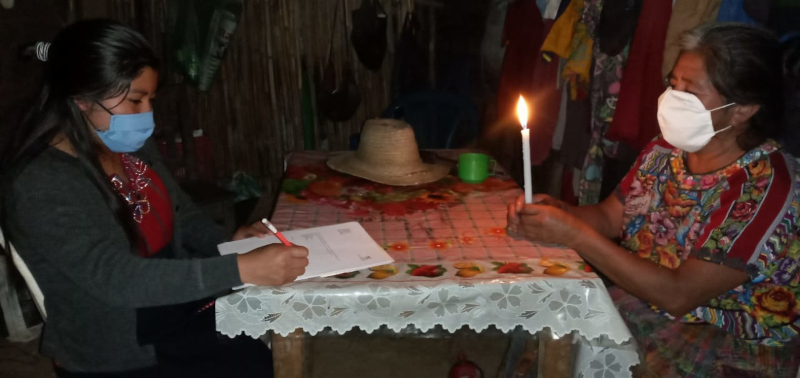
Guatemalan citizens using the community guidelines to discuss COVID-19 mitigation in Comalapa, Chimaltenango, Guatemala (July 2020). Photo credit: Sara Judith Mux Chuy. Used with permission by the author.
An epidemiologist who worked with some of the initial AIDS cases in Guatemala told me, “I did what John Snow did—I mapped the cases and their risk factors carefully and could clearly see that there were at-risk populations where something had to be done, but I presented it to my superiors and they didn’t listen to me like they did to Snow,” adding that “technically, the at-risk populations and the actions to implement were well known […] but politically they didn’t want to accept that those risk behaviors existed in the country […] out of sight, out of mind.” Finally, another epidemiologist noted that Snow’s story was motivating “but then you crash into reality,” and recounted an outbreak at one of the country’s largest public hospitals that she was assigned to investigate. She told me, “We knew it was Acinetobacter, the only difference being that we couldn’t determine the source because they wouldn’t let us take samples… and to this day I have not been given the microbiology database because everyone says there were five Acinetobacter outbreaks last year but not a single one is documented… because they are prioritizing the political.”
Narrative and myth are central elements in the constitution of identities and in how individuals and professions position themselves within society. Through stories we negotiate, make sense of, and at times provisionally resolve persistent contradictions and tensions (Garro and Mattingly 2001; Ochs and Capps 1996). Narratives are not mere stories in the colloquial sense but social constructs that can take the form of events, discourses, schemas, or accounts. They are simultaneously individual and shared, defined by both content and structure. As cultural processes, narratives represent reality while also actively shaping it, drawing on structural, symbolic, and performative dimensions to make the world intelligible. In this sense, they form a type of storytelling that mediates between the personal and the cultural, aligning lived experience with broader frameworks of meaning.
The figure of John Snow illustrates how myth operates within this narrative terrain. Myth–understood as a story about something significant, not as a belief or a literal account of origins–need not necessarily be about gods, cosmogenesis, or the so-called “primitive science” of anthropologists of old (Doty 1986; Segal 1999). On the contrary, modern myths, like that of Snow, distill complex historical processes into narratives that articulate professional values and aspirations. Today’s logic-driven world is not as rational as one may think, given the salience of data and new technologies. Our societies are still deeply shaped by myths, ideologies, and symbolic rituals. Science and theory do not replace religion and fables. They actually coexist right alongside them (Morin 1993; 2006). When looking at myths, the analytic task is not to debunk them but to study their origins and their functions, which reveals how narrative continues to serve as an anchor for identity, authority, and meaning in contemporary social worlds.
What function does the myth of John Snow serve, then, in Guatemalan epidemiologists’ accounts of outbreaks in which the political prevailed over the technical? The myth allows them to negotiate their place and aspirations as professionals in relation to an epidemiology that lives in permanent identity crisis and persistent social status ambiguity. In my prior ethnographic work, I identified elements of the self-portrait of epidemiologists in Guatemala (Cerón 2018). The portrait presents the epidemiologist as a physician, but an atypical one, tangentially interested in the social sciences and one who will never enjoy the economic, humanistic, or social rewards of clinical work. It also presents epidemiologists as powerless quasi-scientists, always subordinate to the decisions of political and administrative decision-makers. By invoking the figure of John Snow, the epidemiologist acknowledges this reality while expressing an aspiration for greater impact. This reality was evident worldwide during the COVID-19 pandemic and its aftermath (Armitage 2021; Milman 2020), and should be understood, accepted, and managed accordingly if we are to improve how we confront future epidemiological emergencies. Moreover, recognizing John Snow as a modern myth helps us understand the contradictions in how our society sees the relationship between public health expertise and political authority. It compels us to confront the paradox of outbreak mitigation when certain ideals are prioritized over our collective health.
This post is the first essay in a series examining the spatial, temporal, and conceptual boundaries of infection. It has been curated by Contributing Editor Tayeba Batool and reviewed by Contributing Editor Lilith Frakes.
References
Armitage, Marie (2021). “Covid-19: public health expertise is being sidelined.” BMJ. 2020 Jun 19;369:m2454. Accessed April 6, 2021. doi: 10.1136/bmj.m2454.PMID: 32561510.Cerón, Alejandro (2018). Epidemiología neocolonial: prácticas de salud pública y derecho a la salud en Guatemala. Guatemala: Asociación para el Avance de las Ciencias Sociales en Guatemala (AVANCSO).
Cerón, Alejandro (2019). “Neocolonial epidemiology: public health practice and the right to health in Guatemala.” Medicine Anthropology Theory 6(1): 30-54.
Daniel, Thomas (2004). Wade Hampton Frost, pioneer epidemiologist 1880–1938: up to the mountain. Rochester, NY: University of Rochester Press.
Doty, William (1986). Mythography: the study of myths and rituals. University of Alabama Press.
Garro, Linda, and Cheryl Mattingly (2001). “Narrative as construct and construction.” Narrative and the cultural construction of illness and healing. Cheryl Mattingly and Linda C. Garro. eds. Berkeley: University of California Press. pp 1-48.
Hempel, Sandra (2007). The strange case of the Broad Street pump: John Snow and the mystery of cholera. Berkeley: University of California Press.
Johnson, Steven (2007). The ghost map: the story of London’s most terrifying epidemic– and how it changed science, cities, and the modern world. New York: Riverhead Books.
Lilienfeld, David (1978). “‘The Greening of Epidemiology:’ Sanitary Physicians and the London Epidemiological Society (1830-1870).” Bulletin of the History of Medicine, 52(4):503-528.
McLeod, Kari (2000). “Our sense of Snow: the myth of John Snow in medical geography.” Social Science & Medicine 50:923-935.
Milman, Oliver (2020). “Where is the CDC? How Trump sidelined the public health agency in a pandemic.” The Guardian. 2020 May 14. Accessed April 6, 2021. https://www.theguardian.com/world/2020/may/14/where-is-the-cdc-trump-covid-19-pandemic
Morin, Edgar (1993)[1986]. El método 3: el conocimiento del conocimiento. Madrid: Ediciones Cátedra.
Morin, Edgar (2006)[1991]. El método 4: las ideas. Madrid: Ediciones Cátedra.
Ochs, Elinor, and Lisa Capps (1996). “Narrating the self.” Annual Review of Anthropology, 25:19-43.
Paneth, Nigel; Vinten-Johansen, Peter; Brody, Howard; Rip, Michael (1998). “A rivalry of foulness: Official and unofficial investigations of the London cholera epidemic of 1854.” American Journal of Public Health, 88(10):1545-1553.
Pelling, Margaret (2022). “ Mythological endings: John Snow (1813-1858) and the history of American epidemiology.” Centaurus, 64(1):231-248.
Segal, Robert (1999). Theorizing about Myth. University of Massachusetts Press.
Susser, Ezra, and Michaeline Bresnahan (2001). “Origins of epidemiology.” Annals of the New York Academy of Sciences, 954(1):6-18.
Vandenbroucke, Jan (2001). “Changing images of John Snow in the history of epidemiology.” Soz. Prädvmtimed, 46:288-293.
Vinten-Johansen, Peter, Howard Brody, Nigel Paneth, Stephen Rachman, Michael Rip, and David Zuck (2003). Cholera, chloroform, and the science of medicine: a life of John Snow. Oxford: Oxford University Press.
