This article is the fifth and final post in a series about gig and platform worker unions in India written by members of the Labor Tech Research Network[1] . Read the introduction to the series here, the second post in the series here, the third post here and the fourth post here.
Collectivization, unionization, and resistance by platform workers form prominent themes in emerging scholarship on platform work, with exciting new collaborations taking place between researchers, platform workers, and gig worker unions. As more researchers join these ranks, we are attentive to the risks of research fatigue and exhaustion faced by gig workers and organizers, who receive numerous requests for interviews and other forms of data collection. When practiced non-extractively, this space opens up possibilities for researchers to collaborate and co-create resources that are useful to unions and workers in their mission to win basic work rights and establish dignity of work.
Researchers are increasingly applying collaborative (such as within the Labor Tech Research Network) and participatory approaches (within Data Workers’ Inquiry) to work with and not on gig workers, union organizers, and platform cooperatives. In the last post of our series, we aim to contribute to these practices of actively building alternatives and strengthening movements, by speaking to three gig worker-organizers from India – Manju Goel, Abdul Nayeem, and Javed. We ask them, how do they view the role of researchers in the gig worker organizing landscape? How can researchers best support gig worker unions? What should we keep in mind when embarking on such collaborations?
All three conversations took place in Hindi, and we compiled each worker organizer’s responses into a single essay, adding context where necessary, translated them into English, and lightly edited them for length and flow. The full post was then translated into Hindi[2], Kannada[3], and Telugu[4] and shared with Manju, Nayeem bhai, and Javed for their approval and feedback before finalizing.
Workers and Researchers: Allies in the Fight for Gig Worker Rights
Javed, in conversation with Ambika Tandon
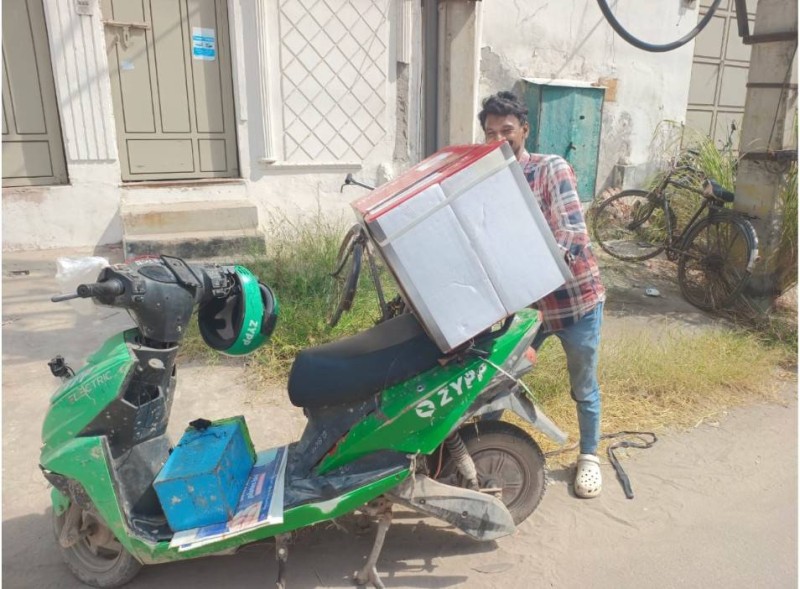
Javed carrying a large parcel on his EV for delivery. Image captured by Ambika Tandon.
My name is Javed, and I am a gig worker. I have been working in app-based delivery and ride services for several years. During this work, we face many kinds of difficulties, such as low earnings, frequent changes in incentives and high commission rates, pressure from customers, and safety-related issues. Last year, I learnt about a union that was trying to bring together workers to raise their voice against the problems faced by workers. I joined it immediately, because I thought it was urgent for workers to become united. The name of our union is Rajdhani App Worker Union, which fights for the rights and better working conditions of gig workers in Delhi.
In the last year, I have met hundreds of riders, listened to their problems, and informed them about labour laws. As part of the union team, we try to connect riders with each other as our main task so that workers can come together. This work is not easy. The first problem is that many riders do not have proper information about unions including what it is and how it can help them. The second major challenge is the environment of fear. Many riders feel that if they raise their voice, the company could block or deactivate their accounts. The third problem is that riders’ work is very busy and time-bound. We have to complete orders throughout the day, so riders don’t have time for meetings or any extra activity. A big challenge is also that some riders think that working individually is better and collective struggle will not bring any significant change.
The most important step to deal with these challenges is to go to the ground and talk directly with riders. When riders have face-to-face conversations, trust becomes stronger. WhatsApp groups, social media, and small meetings can also help in connecting riders. It is also important to explain workers’ rights and labour laws related to their work in simple language. If unions help solve small issues, riders’ trust will increase.
To unite workers, it is first important to explain that most workers share similar problems. Regardless of religion, caste, or gender, workers often face issues such as low earnings, job insecurity, and lack of rights. The union should communicate that our first identity is that we are workers. In meetings and campaigns, everyone should be given equal opportunity to speak and participate and keep focus on shared issues. When workers begin to understand each other’s problems, mutual trust grows and their collective strength increases.
Researchers can play a role in the process of unionisation. The apps’ algorithms decide who gets an order, what rating a rider receives, or even whether an account gets blocked. Riders often do not understand why they are receiving fewer orders. The time pressure and rating system also increase the pressure on riders to work faster. Researchers can help study the real conditions of gig workers by collecting data on how earnings, incentives, and work systems are actually calculated and help riders understand this system. This kind of data is very important to create supportive policies and laws. Researchers can also help bring the voices of workers to the government and society. When research reports are published, they can influence public opinion and policymakers.
I think that researchers should work with workers with respect and trust. They should not see workers’ problems only as numbers or data, but also understand them through the workers’ real experiences. It is also important to share research results with workers so that they know what conclusions have been drawn from their experiences. Researchers should also ensure that workers’ identities and personal information remain safe, and that workers do not face any risk or problems.
Building Researcher-Union Alliances
Abdul Nayeem, in conversation with Anushree Gupta and Eesha Kunduri
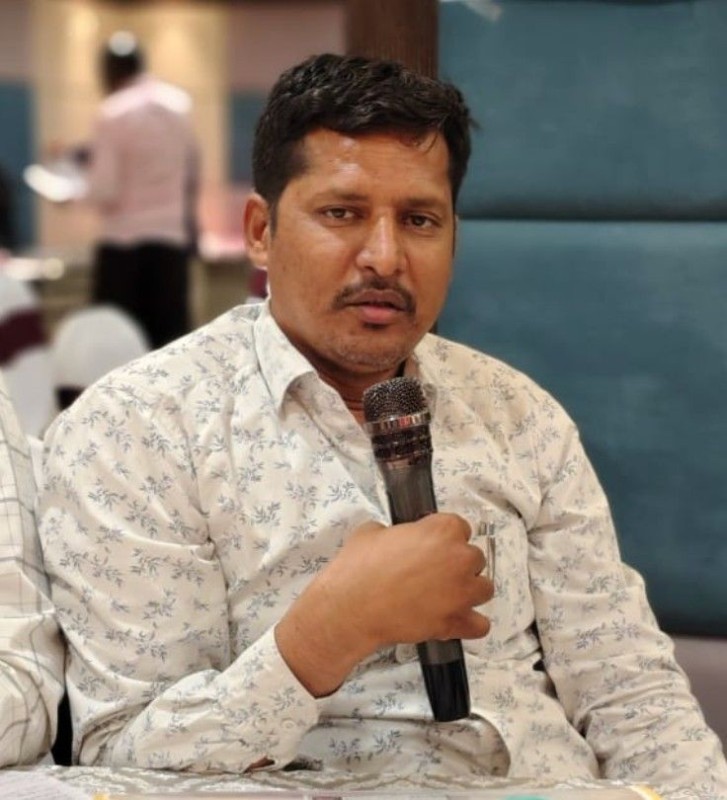
Nayeem bhai speaking at a meeting. Image provided by Eesha Kundari. Photo courtesy: Mohammed Saberuddin.
Abdul Nayeem, whom we call Nayeem Bhai, is an active member of the Telangana Gig and Platform Workers Union (TGPWU), an independent-worker led union based out of Hyderabad. Having worked as a cab driver himself, he has drawn on his astute understanding of the ground realities of gig work to mobilize app-based gig workers and build support for the union’s campaigns. Over the last 7 years, he has worked tirelessly to build TGPWU’s membership registers, taking the message of unionizing from the city’s streets to the airport parking lot, encouraging drivers to join TGPWU. The union has been successful in campaigning to make drop locations visible to drivers and to enforce a weekly payment system. Their most recent win has been a legislation for gig and platform workers in Telangana, won after nearly three years of struggle. In this post, we reflect along with Nayeem Bhai on the importance of building alliances between researchers and trade union members in resisting platform power and supporting workers’ collectivization. As researchers who have collaborated with the union since 2022-23, we have had several conversations that have attuned our critical sensibilities to key issues where researchers can intervene and help sustain collective mobilization.
First, research agendas cannot be pre-defined but need to respond to workers’ shifting realities. For instance, Nayeem Bhai observed that many students and urban youth are attracted to gig work because of the financial independence it claims to offer. However, in reality this work is highly insecure. The rise of AI technologies raises further concerns for precarious work regimes. This is where he suggests researchers should help advance workers’ interests by examining the implications of new features, such as drone deliveries, for the displacement of existing workers. In pointing out the long-term effects of technological innovation on employment trends and the need for researchers to examine questions around climate justice and its intersections with precarious platform work, Nayeem bhai encourages us to think about the process of defining research inquiries in any collaborative effort.
Second, researchers can contribute by tracking developments nationally and internationally with an eye toward legal avenues for redressal in cases of accidents, ID deactivations, etc. TGPWU uses a multifold approach to create public consensus around their issues, raising them first with platform companies, then with the state, and finally asking drivers to mobilize to build public pressure. In the neo-liberal landscape of development work, unions struggle to find support for such constitutional activism and rights-based work, while support for humanitarian work such as food relief and medical camps remains abundant. Considering further the current thrust on social security in the policy landscape in India, researcher-union collaborations must intervene to foreground a discourse that centers labor and labor rights within platform work. Their shared knowledges about legal contestations internationally and the lived experiences of workers, alongside conceptual tools to understand labor, can aid this process.
Finally, we need to resist easy codifications of collaborative work in the form of best practices or action-based research. Instead, we argue for approaching collaboration as an evolving intellectual and political pursuit (Nagar et al. 2019) that embraces the messiness of co-building alliances from the ground up.
Creative Collaborations Between Researchers and Gig Organizers
Manju Goel, in conversation with Isha Bhallamudi
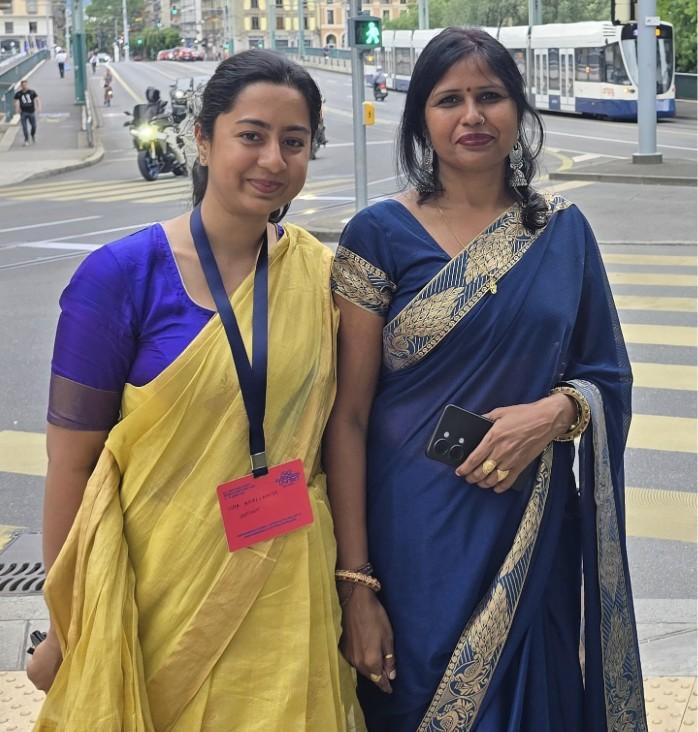
Isha and Manju at the ‘Gig Workers United’ side convening of grassroots gig worker unions from 28 countries, held alongside the ILC annual meeting in Geneva in 2025. Image provided by Isha Bhallamudi.
My name is Manju, and I am an organizer with 17 years of experience. After experiencing the work conditions at Amazon warehouses, I have worked with multiple gig unions in India over the last 4 years, including Jan Pehel, Gig and Platform Service Workers Union, and Gig Worker India. I have organized workers across over 20 different platform companies in the gig economy, and participated in cross-sectoral consultations with state labour ministries to push for legislation to protect gig workers’ rights.
As union organizers, we want to put workers’ issues out there, organize protests, and advocate for our demands. But we don’t have enough outreach and networks to get the word out to ‘big name’ people in academia, activism, organizing, journalism, and politics. Researchers are good at documenting and writing things up properly. They write and talk in English, whereas our writing and speaking is mostly in Hindi which is inaccessible in those worlds. They also publish and put their writing out there in their networks. Even if they don’t have ground experience, they can help with project proposals, press releases, posters, meeting notes, and so on. All this is very useful for unions. Unions are clever at using researchers to get things done, because many researchers have a high capacity for work and a good attitude, and they don’t know how to say no. Often, researchers end up doing more union work than their own work, especially when they are just there for a few months. I have several suggestions for how researchers can support gig unions and gig workers.
The first is by sharing your research findings and highlighting workers’ stories. Workers feel empowered and happy when people are writing about their issues – we want to see ourselves being highlighted. If you live in a slum, if you are not so educated – it is a big thing to see your picture in the newspaper. It lights up people’s faces. If you can, recognize and acknowledge the workers in your study – call them for a screening or a media release. It makes a huge difference, it makes us feel valued, and inspires us to get more people to join the struggle. It also helps us get connected to people and expand our networks. So share the books you write, the articles and videos you make. It will make me so happy if someone asked for my address to send it. I will show it to everyone, put it up on social media, use it to gain some reputation and credibility.
Another way you can assist us is by teaching us transferable skills. Researchers do a lot of the day-to-day work for unions – making press releases, writing notes, posters, setting up meetings, etc. Since you tend to leave after your project is over, you should spend a few hours a week or month teaching us these skills, so that we can be independent in doing this work and don’t have to depend on goodwill. A lot can be learned in a couple of months. It would be very useful to learn: how to post a tweet, use LinkedIn, use AI tools, make a poster on Canva, publish a blog post, etc. These days, it is important to know English otherwise you lose out on wages and opportunities. So, teaching us some basic speaking English while you are with us, would be very useful. But unions also overwhelm researchers with too much work, and how much can one person do after all. I also suggest that researchers should stay joined with us, instead of leaving fully. Maybe a group can be created and researchers should occasionally join to clear our doubts about such skills and stay plugged in.
Finally, I request researchers to find creative ways to financially support organizers in your study, such as sending small monthly amounts for fixed periods (like a few months) to tide us through financial precarity, or writing us into projects as collaborators.
This post was curated by Contributing Editor Misria Shaik Ali and reviewed by Contributing Editor Kanikka Sersia.
Notes
[1] Preferred citation: Siddiqui, Javed, Manju Goel, Abdul Nayeem, Isha Bhallamudi, Anushree Gupta, Eesha Kunduri, Ambika Tandon, 2026. “Platform Workers’ Organizing Diaries: Messages from Union Organizers to Researchers.” Platypus, American Anthropological Association, [insert month and date], [insert URL].
[2] The Hindi post was translated by authors Ambika Tandon and Javed Siddiqui.
[3] The Kannada post was translated by Kaveri Medappa.
[4] The Telugu post was translated by Sruthi Vinjamuri. Sruthi Vinjamuri works at the UNESCO Institute for Lifelong Learning in Hamburg on the Global Network of Learning Cities (GNLC). Her work involves supporting city-level administrators in better monitoring and evaluating lifelong learning progress in their cities, and helping older adult residents of GNLC cities build basic digital skills.
Acknowledgements
A huge thank you to the Labor Tech Research Network for facilitating a fundraiser to compensate Manju, Nayeem Bhai, and Javed for their time, without which this post wouldn’t have been possible, and thank you to Kaveri Medappa for putting together the call. We are immensely grateful to the individual contributors who responded to the fundraiser and made this collaborative post possible. A heartfelt thank you to Ambika Tandon, Kaveri Medappa, and Sruthi Ranjani Vinjamuri for their generosity and care in translating this post into Hindi, Kannada, and Telugu respectively.
References
Nagar, Richa. 2019. Hungry Translations Relearning the World through Radical Vulnerability. Champaign, IL: University of Illinois Press.
