Concerns about declining sperm quality and male reproductive capacity have become increasingly prominent in scientific, clinical, and public discussions of fertility. Yet infertility has historically been located within women’s bodies and treated primarily as a women’s problem, placing women under disproportionate reproductive responsibility, scrutiny, blame, and clinical intervention. This framing has also contributed to men’s reproductive bodies and experiences receiving comparatively limited attention. Growing concern about male reproductive capacity has been accompanied by increasing attention to how male fertility might be preserved, improved, and optimised, alongside broader demographic narratives that frame declining reproductive capacity as a potential threat to future populations. Within these discussions, men are increasingly constituted as reproductive subjects whose bodies can be monitored, modified, and enhanced. Yet this emphasis on improving male reproductive capacity sits alongside a strikingly different representation of men once infertility is diagnosed. Across clinical and social accounts, male infertility is frequently approached through the language of deficit, loss, vulnerability, and incapacity. What would it mean to develop a strengths based approach to male infertility?
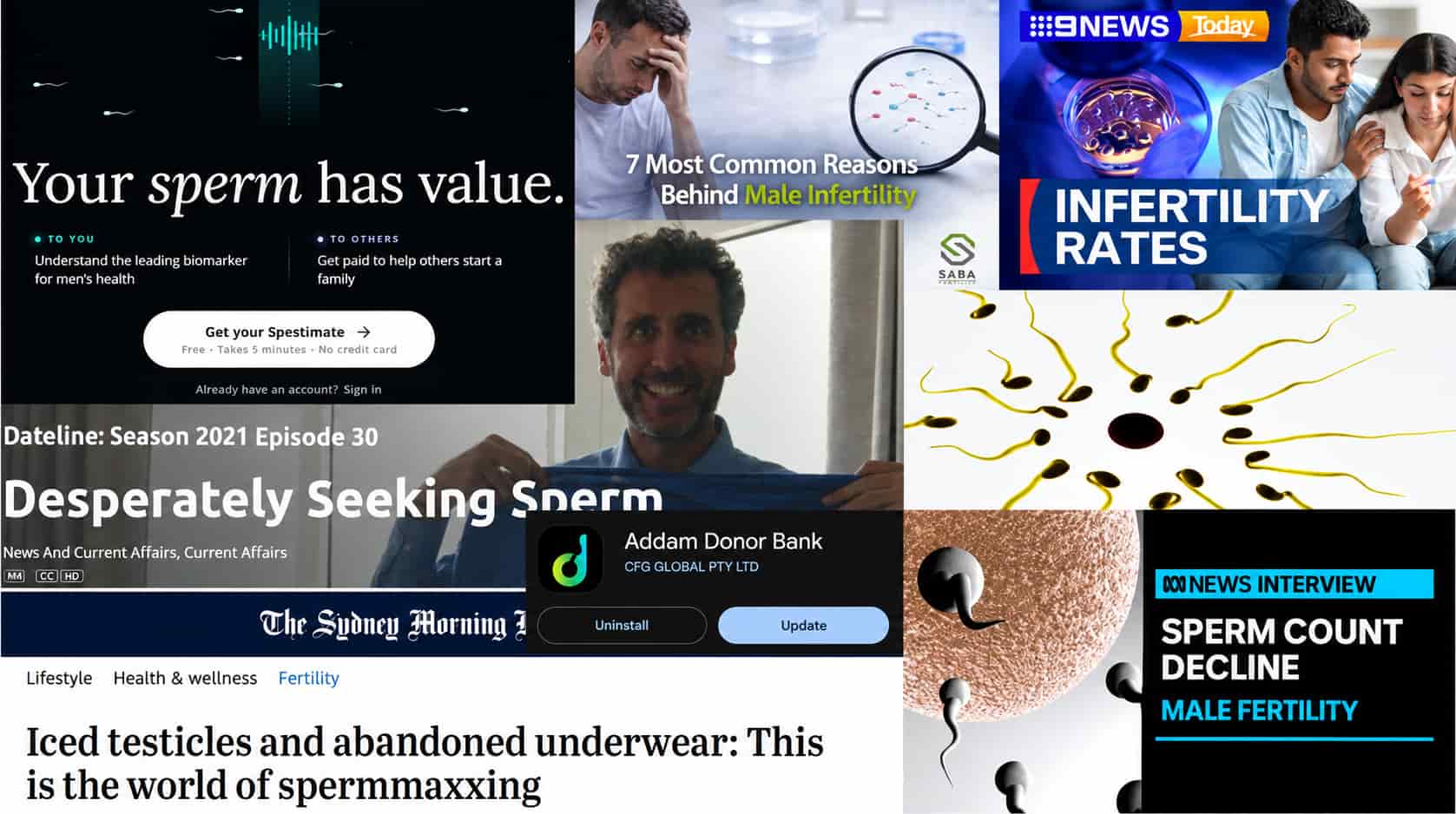
Figure 1. Author compiled collage illustrating Australian media and digital representations of male infertility, sperm quality, and reproductive optimisation.
Such perspectives are important for recognising the stigma, emotional distress, and disrupted aspirations to fatherhood that infertility can involve, but they can also narrow what becomes visible about men’s reproductive lives. Less attention is given to how men mobilise resources, build supportive relationships, negotiate or challenge gender expectations, respond to medical and social pressures, and reconfigure their reproductive futures. Rather than denying the difficulties associated with infertility, this article therefore asks what might become visible if male infertility were approached not only through what men have lost or cannot do, but also through the capacities, relationships, and resources they mobilise in response to reproductive uncertainty
What Counts as Male Infertility?
Male infertility is most commonly defined through biomedical understandings of reproductive capacity and the achievement of pregnancy. In Australia and New Zealand, male factor infertility was reported in approximately one in four assisted reproductive technology cycles in 2023. Among cycles in which the male intended parent was reported as having male factor infertility, 77.4 per cent were classified as idiopathic or unexplained (Kotevski et al., 2025). The Australia and New Zealand Society of Reproductive Endocrinology and Infertility defines infertility as a disease or clinical condition involving an inability to achieve a successful pregnancy, identified through reproductive history, diagnostic testing, or the need for medical intervention (ANZSREI, 2025). These definitions provide important clinical parameters for identifying reproductive difficulties and determining access to investigation and treatment. At the same time, they illustrate how infertility becomes clinically recognisable through particular measures of reproductive function, reproductive expectations, and encounters with healthcare systems.
Biomedical definitions of male infertility have been criticised for framing reproductive difference through deficiency and deviance (Dudgeon & Inhorn, 2004), as well as through disability or inability (Khetarpal, 2012), while debate continues over whether infertility should be understood as an individual or couple-based condition (Imeson & McMurray, 1996). The concept of social infertility further complicates an exclusively physiological definition by drawing attention to reproductive barriers associated with social, relational, or temporal circumstances, including singlehood, same sex partnerships, and reproductive timing. Reproductive incapacity therefore does not map neatly onto a single biological state. What counts as infertility depends not only on reproductive physiology, but also on the clinical, relational, and social conditions through which reproductive capacity is evaluated and given meaning.
These definitional boundaries also shape who becomes visible within research on male infertility. Much of what is known about lived experiences of infertility comes from participants recruited through fertility clinics, particularly individuals already seeking medical help or undergoing IVF treatment (Greil et al., 2010) Such research provides important insights into diagnosis and treatment, but privileges reproductive difficulties that have already become clinically recognised and people who have entered formal healthcare pathways. Men who do not seek or continue treatment, pursue other pathways to parenthood, remain involuntarily childless, or understand their reproductive circumstances through other frameworks can consequently become less visible. What counts as male infertility is therefore also a methodological question: how researchers define and locate infertility influences whose experiences become available for analysis.
How Did Suffering Become the Dominant Story of Male Infertility?
Research on men’s lived experiences of infertility has documented the profound emotional and social difficulties that reproductive uncertainty can entail, including shame, stigma, inadequacy, social withdrawal, and disrupted aspirations to fatherhood. These accounts have been important in challenging assumptions that infertility is primarily a women’s issue or that men are comparatively unaffected by reproductive difficulties. Yet the prominence of these findings has also contributed to a representation of the infertile man organised predominantly around suffering, vulnerability, and loss (see image below). While these experiences should not be minimised, treating them as the principal story of male infertility risks narrowing the range of experiences, practices, and responses through which men navigate reproductive uncertainty.
One explanation for this prominence lies in the close analytical relationship established between male infertility and masculinity. Reproductive capacity is culturally associated in many contexts with virility, sexual potency, fatherhood, and manhood, meaning that infertility can be experienced as a gendered threat to identity (Throsby & Gill, 2004). Terms such as sterile, impotent, or “shooting blanks” can reinforce associations between reproductive difficulty, deficiency, and compromised masculinity (Wahlberg, 2023), while research drawing on hegemonic masculinity has examined tensions between expectations of virility and stoicism and the vulnerability that may accompany infertility (Hanna & Gough, 2022b). These meanings are embedded within broader pronatalist ideologies (Greil et al., 2011), religious traditions (Sewpaul, 1999), expectations surrounding kinship and parenthood, and the commercialisation of reproductive health (Hanna & Gough, 2022a). Infertility is therefore mediated through particular social worlds in which reproductive capacity, fatherhood, and masculinity acquire meaning.
At the same time, neither psychological distress nor infertility as a threat to masculinity is uniform. Men may distance themselves from an infertility diagnosis, become actively involved in treatment, seek information and support, reconsider desires for biological relatedness, or renegotiate what fatherhood and reproductive success mean to them. Interpreting these responses primarily through the restoration of threatened masculinity may obscure forms of agency, care, adaptation, and meaning making, while inadvertently reproducing the assumption that reproductive capacity is intrinsically constitutive of masculinity. Medical definitions also separate infertility from other circumstances in which male reproductive capacity is altered, constrained, or lost, including vasectomy, forced or coerced sterilisation, medical treatment, or injury. These experiences often fall outside the category of infertility, but their exclusion raises questions about which forms of reproductive incapacity become recognised and studied as infertility, and which remain outside its boundaries. The dominance of suffering may therefore reflect not only what infertility does to men, but also how infertility is defined, where researchers look for it, and which male reproductive experiences consequently become available for analysis.
From Medicalisation to Reproductive Debility
The tendency to understand male infertility through individual deficit and suffering is closely connected to its medicalisation. Loughran and Davis (2017), for example, argue that male infertility has frequently been approached through individualised and pathological frameworks that give less attention to medical practices, environmental conditions, social relationships, and political structures. As Tessa Moll argues, ‘the medicalisation of infertility relocated involuntary childlessness to the interior of the body, searching for explanations in semen samples, fallopian tubes, uteruses, and hormone levels” (2026). In men, diagnostic practices similarly locate reproductive difficulty within measurable bodily functions. While these practices are essential to diagnosis and treatment, locating infertility primarily within individual bodies can make less visible the wider conditions through which reproductive capacities are produced, sustained, constrained, or damaged.
This individualisation is particularly evident in contemporary attention to lifestyle and male fertility. Diet, exercise, alcohol consumption, smoking, weight, stress, and other everyday practices are increasingly presented as factors through which men may protect or improve their reproductive capacity. Lifestyle modification can provide meaningful opportunities for men to participate actively in their reproductive care and regain a sense of control over uncertain reproductive outcomes. At the same time, it can contribute to the moralisation of the reproductive body by making fertility appear dependent on appropriate forms of self-management. Reproductive difficulty may consequently be interpreted not only as a biological problem, but as the result of failing to manage the body correctly (see image below). Advice to optimise fertility is produced through interactions between clinical recommendations, public health discourses, media narratives, fertility industries, pronatalist expectations, and broader ideals of bodily optimisation (Hanna & Gough, 2022a). Reproductive capacity thus becomes not only something that can be measured, but something individuals may increasingly be expected to manage and improve.
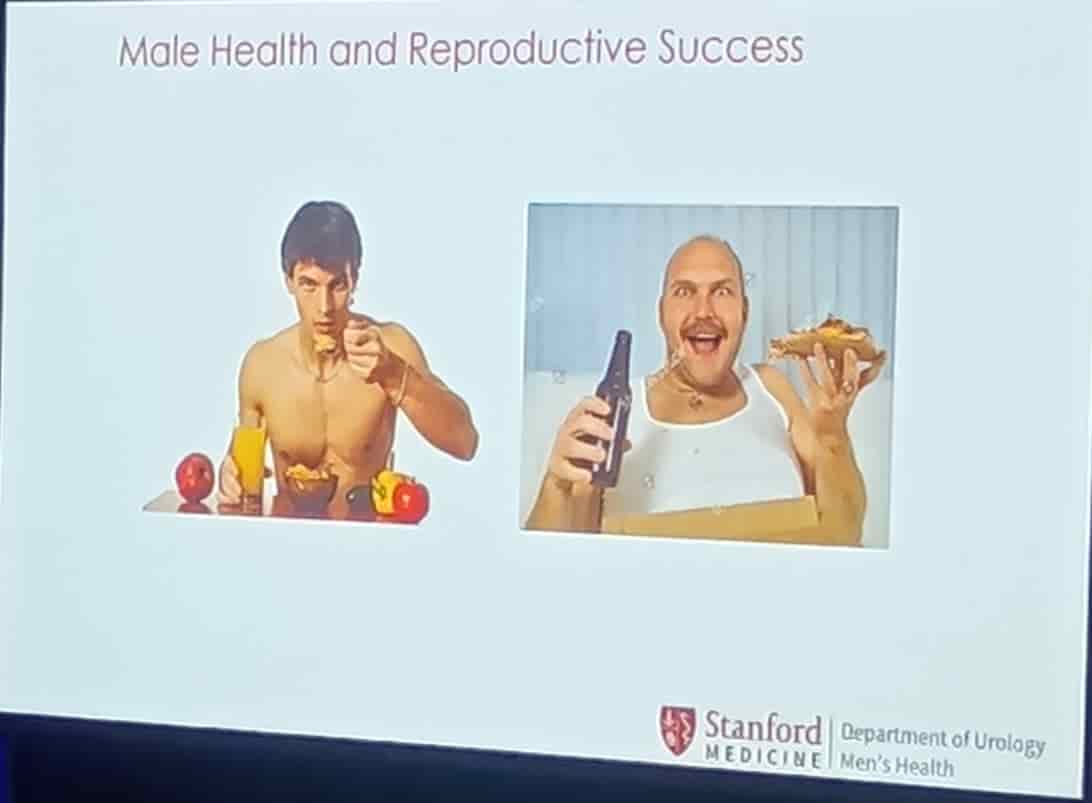
Figure 2. Photograph of a conference presentation slide depicting male health and reproductive success through contrasting lifestyle practices, 2026.
The concept of reproductive debility provides one way of broadening this analysis beyond individual bodies and behaviours. Fertility is also shaped by environmental exposures, occupational conditions, access to healthcare, economic insecurity, reproductive policies, racism, colonial histories, and unequal distributions of health and harm. Thinking with scholarship on debility (Moll, 2026) directs attention towards the social, political, economic, and environmental processes through which bodily capacities are differentially supported or eroded. Applied to reproduction, it asks how reproductive capacities and the practices required to make and sustain kin are enabled for some people while being constrained or diminished for others. As Tessa Moll (2026) argues, legacies of colonialism, extractive economies, environmental racism, austerity, and unequal healthcare infrastructures participate in the production and distribution of reproductive capacity itself. Reproductive debility therefore shifts the analytical question from what is deficient within an individual reproductive body towards the broader conditions through which reproductive capacities are enabled, altered, constrained, and valued.
Toward a Strengths-Based Approach to Male Infertility
What, then, would it mean to adopt a strengths-based approach to male infertility? Strengths based approaches emerged as a challenge to models that understand people primarily through problems, deficits, and pathologies, shifting attention towards capacities, resources, relationships, agency, and possibilities for change. Applied to male infertility, such an approach would acknowledge reproductive impairment, emotional distress, stigma, and an unfulfilled desire for fatherhood while expanding the analysis beyond suffering. It would ask what becomes visible when men are understood through their knowledge, practices, relationships, agency, and capacity to mobilise resources, negotiate challenges, and create possibilities in response to reproductive uncertainty.
Such a shift would require broadening the analytical focus beyond the individual infertile body. As the preceding discussion has shown, reproductive capacity is shaped through medical practices, gender expectations, relationships, technologies, environments, institutions, and wider political and economic conditions. Strength, therefore, should not be understood simply as an individual capacity to cope with infertility. Strength may also be found in relationships of care, collective forms of support, access to knowledge and healthcare, community resources, alternative understandings of kinship, and the capacity to challenge or renegotiate reproductive and gender expectations. This relational understanding is particularly important if a strengths-based approach is to avoid reproducing neoliberal expectations that individuals should adapt to adversity through resilience, self-management, and bodily optimisation.
Male (in)fertility makes these dynamics particularly visible because what is at stake is not only reproductive impairment, but the possibility of producing life and pursuing particular reproductive futures. Questions about which reproductive difficulties receive recognition and care, whose aspirations are supported, which interventions become available, and which pathways to parenthood are legitimised reveal differential valuations of bodies, relationships, kinship, and reproductive futures.
A strengths-based approach would also require taking seriously the diversity of male reproductive trajectories and the different meanings attached to fertility, masculinity, and fatherhood across social and cultural contexts. Centring analysis exclusively on cisgender men risks reproducing narrow assumptions about whose reproductive experiences become recognised within research organised around the category of “male infertility”. Research could instead examine how cisgender, transgender, non-binary, and gender diverse individuals negotiate, resist, reproduce, or transform gendered expectations through their reproductive experiences. It could also explore the diverse reproductive futures people construct, including continuing or discontinuing treatment, seeking support, reconsidering biological relatedness, pursuing other pathways to parenthood, or reimagining a meaningful life without parenthood. Such an approach would recognise individuals as reproductive actors navigating changing possibilities and constraints, rather than defining them primarily as infertile patients responding to reproductive failure.
A strengths-based approach to male infertility therefore requires more than changing the language used to describe infertile men. It requires reconsidering where research looks for male reproductive experiences, which experiences are recognised as relevant, and how reproductive capacity itself is conceptualised. Bringing attention to capacities, relationships, collective resources, and reproductive futures can complement, rather than displace, existing scholarship on suffering and vulnerability. It also requires attention to colonial legacies, regimes of debilitation, political hierarchies, and unequal infrastructures that participate in the production and distribution of reproductive capacity itself. The aim is not to deny what infertility can take away, but to resist allowing loss and incapacity to exhaust what can be known about men’s reproductive lives. Doing so may provide a broader account of male infertility, one capable of recognising both the conditions that constrain reproductive possibilities and the ways men negotiate, transform, and create reproductive futures within them.
This post was curated by Contributing Editor Juan Camilo Ospina Deaza and reviewed by Contributing Editor Bronte Jones
References
Australian and New Zealand Society of Reproductive Endocrinology and Infertility. (2024). Definition of infertility: Consensus statement. Amended May 2025.
Davis, G., & Loughran, T. (2017). The Palgrave Handbook of Infertility in History: Approaches, Contexts and Perspectives. Palgrave Macmillan UK. http://ebookcentral.proquest.com/lib/bibliojaveriana-ebooks/detail.action?docID=5015721
Dudgeon, M. R., & Inhorn, M. C. (2004). Men’s influences on women’s reproductive health: Medical anthropological perspectives. Social Science & Medicine, 59(7), 1379–1395. https://doi.org/10.1016/j.socscimed.2003.11.035
Greil, A. L., Slauson-Blevins, K., & McQuillan, J. (2010). The experience of infertility: A review of recent literature. Sociology of Health & Illness, 32(1), 140–162. https://doi.org/10.1111/j.1467-9566.2009.01213.x
Greil, A., McQuillan, J., & Slauson-Blevins, K. (2011). The Social Construction of Infertility. Sociology Compass, 5(8), 736–746. https://doi.org/10.1111/j.1751-9020.2011.00397.x
Hanna, E. S., & Gough, B. (2022a). 5: ‘There’s So Much Bollocks’: Men Navigating Lifestyle Advice for Infertility. Emerald Publishing Limited. https://doi.org/10.1108/9781800716094
Hanna, E. S., & Gough, B. (2022b). 6: Liquid Masculinity: The Fluid Nature of Masculinity in the Context of Male Fertility Body Projects. Emerald Publishing Limited. https://doi.org/10.1108/9781800716094
Imeson, M., & McMurray, A. (1996). Couples’ experiences of infertility: A phenomenological study. Journal of Advanced Nursing, 24(5), 1014–1022. https://doi.org/10.1111/j.1365-2648.1996.tb02938.x
Khetarpal, A. (2012). Infertility:Why can’t we classify this inability as disability? Australasian Medical Journal, 5(6), 334–339. https://doi.org/10.4066/AMJ.2012.1290
Moll, T. (2026). Toward a Politics of (In)Fertility: Reproductive Debility in Africa. American Anthropologist, n/a(n/a). https://doi.org/10.1111/aman.70113
Sewpaul, V. (1999). Culture Religion and Infertility: A South African Perspective. The British Journal of Social Work, 29(5), 741–754.
Throsby, K., & Gill, R. (2004). “It’s Different for Men”: Masculinity and IVF. Men and Masculinities, 6(4), 330–348. https://doi.org/10.1177/1097184X03260958
Wahlberg, A. (2023). The Substance Of Sperm. In A Companion to the Anthropology of Reproductive Medicine and Technology (pp. 317–331). John Wiley & Sons, Ltd. https://doi.org/10.1002/9781119845379.ch18
