The process of repatriation—or the return of artifacts to their origin communities around the world—has taken center stage globally, drawing intense interest from anthropologists, archaeologists, historians, and museum professionals. It remains as much a domestic (within nations) discussion as an international one. The debate plays out on both scales because there exist at least two opposing views on who owns cultural heritage. One side argues that cultural objects form a national cultural heritage—a view known as cultural nationalism (Merryman 1986). In contrast, those who advocate for a cultural internationalism view these objects as part of a shared human culture that belongs to all humanity. From this international perspective, an artifact’s country of origin or current location does not matter because cultural property belongs to “everyone” (Appiah 2009). Therefore, protecting and preserving it becomes everyone’s interest and responsibility.
Latin America is a key player in this discussion, being one of the world’s most heavily looted regions. Yet, we often treat the whole region as if it is homogeneous. Brazil, for example, is a major outlier: while its vast landscape holds centuries of rich and diverse human history, its cultural history often gets overshadowed by the famous, highly visible monuments of Peru and Mexico, like Machu Picchu or the Mayan pyramids. Those neighboring countries built a very different relationship with cultural patrimony: starting in the early 1900s, they attracted heavy foreign funding, developed stricter laws to protect their heritage, and continue to pour massive budgets into archaeology today (Veloso & Cavalcanti 2007; Ferreira 2011).
Brazil, on the other hand, has historically prioritized sites from the post-1500 colonial and imperial eras over Indigenous settlements from before European arrival (Ferreira et al. 2011) and has, very recently, suffered devastating tragedies. Tragic fires at the National Museum in 2018 and the Federal University of Minas Gerais in 2021 destroyed millions of irreplaceable artifacts—including “Luiza,” the oldest human skeleton ever found in South America. Things only got worse when COVID-19 struck. Public health restrictions severely weakened IPHAN, the main government agency responsible for protecting historic sites, leaving heritage locations largely unmonitored. On top of that, the pandemic hit Indigenous communities exceptionally hard, disrupting partnerships they have built with archaeologists to protect and preserve their ancestral history (IPHAN 2021).
Surprisingly, despite these disasters, public neglect, and chronic underfunding, much of the Brazilian heritage debate in academia and beyond continues to advocate for repatriation which remains the widely accepted consensus. This contradiction is explained by the powerful influence of a widespread paradigm in contemporary archaeology that views the discipline as deeply tied to colonial assumptions. Scholars argue that these traditional Western narratives have caused lasting harm, and that archaeologists must actively undo them by adapting their methods to respect and incorporate non-Western ways of understanding the past (Atalay 2012; Fine-Dare 2002; Colwell and Ferguson 2008; Watkins 2000).
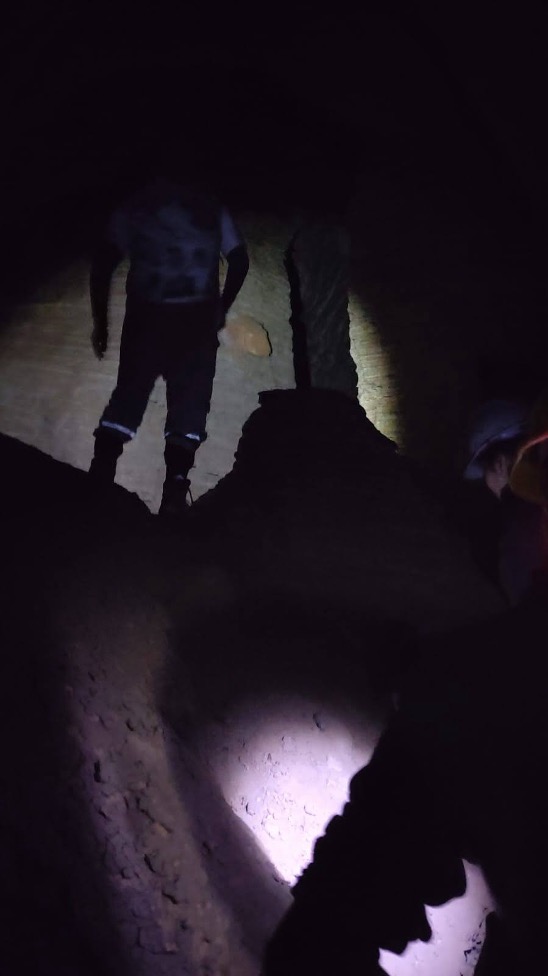
A Brazilian archaeologist examines soil and wall patterns at a Holocene site. Image by author.
Repatriation is an important strategy within this paradigm. It took shape around the 1970s—a shift epitomized by, among other events, the 1978 UNESCO Intergovernmental Committee’s efforts to facilitate the return of stolen or illicitly obtained “cultural property” to its countries of origin (UNESCO 2020). While it initially emerged because of growing Indigenous movements in the Americas and Australia, it has expanded more recently to Africa, Europe and other regions. An example of this shift was French President Emmanuel Macron’s 2017 speech calling for the systematic restitution of African heritage to that continent (Macron 2017). This paradigm is particularly powerful because it impacts not only academic institutions and research but also national and international policy and diplomacy.
In Brazil, the debate around repatriation plays out within a legal framework where the nation-state ultimately determines what constitutes the “common interest” of its people (et al. 2024). Under Brazilian law, Indigenous people have the right to maintain, protect, and develop their past, present, and future cultural manifestations (IPHAN 2018), however archaeological sites are property of the Union (IPHAN 2022), which bears the ultimate legal responsibility for protecting them.
Because of this legal structure, international repatriation efforts usually involve the federal government, as seen in the high-profile return of the Tupinambá cloak to the National Museum in 2024 (Bezerra & Nóbrega 2025). In cases where foreign institutions cannot or refuse to return physical objects, sometimes they provide high-quality casts or photographs instead. The effort invested in these returns highlights a paradox where the state insists on legal stewardship while failing to invest in protecting the heritage already under its care.
At the same time, alternative approaches are gaining popularity through digital repatriation. Under this model, the physical artifacts remain in museums abroad, while Brazil receives digital assets, such as high-resolution 3D models (Athias 2019a; Athias 2019b; Costa & Pires 2024). While virtual copies might seem like a low-cost solution compared to storing fragile artifacts, digital preservation brings its own financial realities. Maintaining digital files requires long-term public funding and sharing them with the public demands investment in education, specialized software, high-end computers, and interactive displays. Ultimately, while digital repatriation honors the spirit of returning heritage, virtual files cannot fix the underlying crisis of cultural heritage preservation in a country struggling with chronic underfunding.
Despite being the most widely discussed alternative to physical repatriation, virtual repatriation is not the only way archaeologists and communities seek to address the problem of colonial dispossession. Alternative solutions exist, but they receive limited attention because, I argue, they challenge the dominant paradigm in contemporary archaeology, which increasingly understands the discipline as deeply entangled with colonial assumptions and histories. This tension reveals how complex debates over repatriation can be, since they involve competing understandings of nationalism, community, cultural preservation, and the legacies of colonialism.

Sunset near an archaeological site in southeastern Brazil. Image by author.
One relatively neglected perspective comes from Glicéria Tupinambá, a prominent leader of the Tupinambá de Olivença Indigenous community, in her discussion of the repatriation of the Tupinambá cloak from Denmark. Rather than calling for the cloak’s return—since the repatriation would amount, according to her, to “forgiving the Europeans” for the expulsion and killing of her ancestors—she proposed that European institutions should take responsibility for preserving Tupinambá culture by assuming the financial and logistical costs of caring for these fragile objects (Faria 2023). Her position complicates the assumption that repatriation is always the preferred or most decolonial outcome, demonstrating that Indigenous perspectives on the return and preservation of cultural objects can be far more varied than dominant archaeological frameworks suggest.
A second perspective that is rarely discussed is “expatriation.” I first encountered this perspective while working with Brazilian archaeologists at an important Holocene (older than 11,700 years) archaeological site in southeastern Brazil. The director of the site, frustrated by the severe lack of resources available to preserve archaeological materials, questioned the viability of repatriation models for Brazil. He suggested that when institutions in the country lack the resources and infrastructure to safely preserve and care for archaeological materials, keeping them in European institutions—where many are currently housed and, in his view, properly cared for—might be preferable. He pointed out that, had materials from his site been repatriated to Brazil, they would most likely have been destroyed in the 2018 fire at the Museu Nacional, where they would have been housed alongside Luzia.
These positions reveal two important tensions. First, they highlight the difficult relationship between preservation, institutional precarity, and historical responsibility, prompting us to rethink what repatriation might mean in contexts where the institutions expected to preserve cultural materials are themselves vulnerable. They also raise questions about what “care” for archaeological materials can mean when the capacity to provide that care is unevenly distributed. Second, they reveal perspectives that diverge substantially from the presumed consensus around repatriation. Such perspectives can be obscured when a dominant intellectual paradigm is applied without sufficient attention to local contexts and institutional realities, ultimately reinforcing hierarchies among forms of knowledge—both internationally and within countries, including hierarchies that marginalize Indigenous perspectives and other local forms of expertise.
This post was curated by Contributing Editor Andra Sonia Petrutiu, reviewed by Contributing Editor Karina Aranda.
References
Appiah, K. A. (2009). Whose culture is it? In J. Cuno (Ed.), Whose culture? The promise of museums and the debate over antiquities (pp. 71–86). Princeton University Press.
Atalay, S. (2012). Community-based archaeology: Research with, by, and for indigenous and local communities. University of California Press.
Athias, R. (2019a). Coleções etnográficas, povos indígenas e repatriação virtual: Novas questões para um velho debate. De Acervos Coloniais Aos Museus Indígenas: Formas de Protagonismo e de Construção Da Ilusão Museal, 337–364.
Athias, R. (2019b). Coleções Etnográficas, Povos Indígenas e Repatriação Virtual: Novas Questões, Velhos Debates. In J. Pacheco de Oliveira & R. de C. Melo Santos (Eds.), De acervos coloniais aos museus indígenas: Formas de protagonismo e de construção da ilusão museal. (pp. 337–364). Editora UFPB.
Bezerra, J. M. de V., & Nóbrega, F. F. B. (2025). A repatriação de objetos museais na perspectiva do Direito Comparado Decolonial: O caso do Manto Tupinambá. Revista Direito e Práxis, 16, e92612. https://doi.org/10.1590/2179-8966/2025/92612
Colwell, C., & Ferguson, T. J. (Eds.). (2008). Collaboration in archaeological practice: Engaging descendant communities. AltaMira Press.
Costa, K., & Pires, K. (2024). Repatriação virtual X repatriação física: Avanços e limitações na descolonização museal. Revista Memória em Rede, 16(31), 270–288. https://doi.org/10.15210/rmr.v16i31.26763
da Silveira, C. E. M., Kaiser, M. V., & Fich, B. G. (2024). O papel da Convenção nº169 da OIT e da Constituição de 1988 na promoção dos direitos políticos dos povos indígenas e na superação da política integracionista no Brasil. Revista Direito & Paz, 1(50), 259-279.
Faria, J. A. E. (2023). “Seus únicos tesouros são penas de pássaros”: Reflexões jurídicas sobre patrimônio cultural indígena brasileiro em museus estrangeiros. Revista de Direito Internacional, 20(2). https://doi.org/10.5102/rdi.v20i2.9179
Ferreira, L. M., Ferreira, M. L. M., & Rotman, M. B. (Eds.). (2011). Patrimônio cultural no Brasil e na Argentina: estudos de caso. Annablume.
Fine-Dare, K. S. (2002). Grave injustice: The American Indian Repatriation Movement and NAGPRA. University of Nebraska Press.
Instituto do Patrimônio Histórico e Artístico Nacional (IPHAN). (2018, September 19). Portaria nº 375, de 19 de setembro de 2018: Institui a Política de Patrimônio Cultural Material do Iphan e dá outras providências. Ministério da Cultura. https://www.gov.br/iphan/pt-br/centrais-de-conteudo/legislacao/atos-normativos/2018/portaria-no-375-de-19-de-setembro-de-2018
Instituto do Patrimônio Histórico e Artístico Nacional (IPHAN). (2021). Relatório de gestão 2020: Exercício de 2020. Ministério da Cultura. https://www.gov.br/iphan/pt-br/acesso-a-informacao/auditorias-1/prestacao-de-contas-1/relatorios-de-gestao/exercicio-anteriores/exercicio-2020/relatorio-de-gestao-2020.pdf.
Instituto do Patrimônio Histórico e Artístico Nacional. (2022, February 21). Patrimônio Arqueológico: Legislação. Ministério da Cultura. https://www.gov.br/iphan/pt-br/patrimonio-cultural/patrimonio-arqueologico/legislacao
Macron, E. (2017, November 28). Emmanuel Macron’s speech at the University of Ouagadougou. Élysée. https://www.elysee.fr/en/emmanuel-macron/2017/11/28/emmanuel-macrons-speech-at-the-university-of-ouagadougou
Merryman, J. H. (1986). Two Ways of Thinking About Cultural Property. Merryman, J. H. (1986). Two ways of thinking about cultural property. American journal of international law, 80(4), 831-853.
Négri, V. (2024). The 1970 Convention: Cultural diversity before the letter of the law | The UNESCO Courier. https://courier.unesco.org/en/articles/1970-convention-cultural-diversity-letter-law
UNESCO. (2020, October 8). 50 years of the fight against the illicit trafficking of cultural goods. https://courier.unesco.org/en/articles/50-years-fight-against-illicit-trafficking-cultural-goods
Veloso, T. M. M. G., & Cavalcanti, J. E. A. (2007). O turismo em sítios arqueológicos: Algumas modalidades de apresentação do patrimônio arqueológico no Brasil. Revista de Arqueologia, 20(1), 101–114. https://doi.org/10.24885/sab.v20i1.232
Watkins, J. (2000). American Indian values and scientific practice. Alta Mira Press.
