Microbiome Monitoring: Smart Toilets, Precision Medicine, and the Post-Genomic Bowel
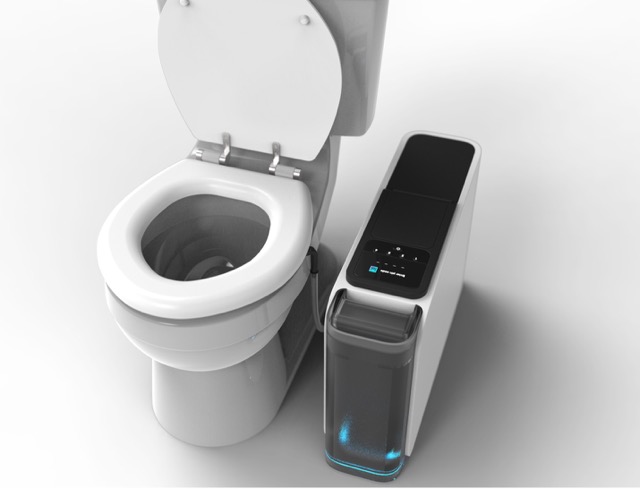
Imagine that every time you poop, your hygiene routine involves depositing your used toilet paper into a toilet-side receptacle. As you wash your hands, the device mixes, processes, and extracts microbial DNA from your stool. It sequences the microbial DNA for a real-time readout of your microbiome (the microbial genomes from within your gut, or at least the ones that made it to your stool), automatically sending the information to a large-scale microbiome database that integrates it into its data, algorithms, and analytic programs. The program connects to an app on your phone, telling you that based on your personal version of a healthy microbiome, today your microbiome is looking a little low in the bacterial species Akkermansia municiphila and high in some risky metabolites (the molecular outputs of some of your gut microbes). It recommends that you eat extra polyphenol- and fiber-rich foods today, and asks if you want a recipe for a berry- and seed-laden oatmeal for breakfast. The vision I describe here is a technoscientific imaginary: a shared vision of a future, mediated by science and technology (Marcus 1995). Technoscientific imaginaries are always embedded in historic and cultural contexts and narratives, which shape what future visions we find possible, desirable, and relevant. In this post, I examine how this technoscientific imaginary draws on narratives about promise and precision medicine inherited from genomics, as well as newer ones based in new understandings of the human microbiome and its powerful associations with many aspects of human health. (read more...)
