Archives

High-Tech Hand Work: When humans replace computers, what does it mean for jobs and for technological change?

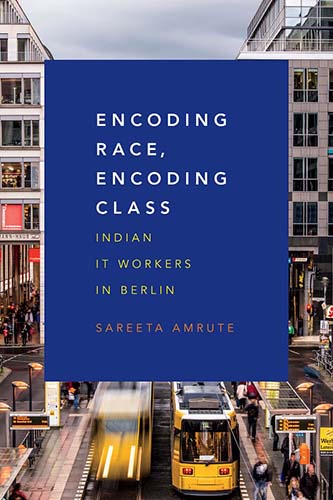
Author’s Note: Since its initial publication, I have reframed this post to more fully integrate the argument and data. This revised post reflects these changes. Recent years have brought a resurgence of interest in how the rapid evolution of computer technologies is affecting work. Some have examined how smart machines are replacing manual labor, swallowing up the manufacturing jobs that have driven the growth of China’s economy. Others reveal how algorithms are supplanting knowledge workers. “Big data” and “machine learning” techniques help software engineers create algorithms that make more accurate and less biased judgments than well-trained humans. Software is already doing the work of medical lab technicians and replicating higher-order cognitive functioning, such as detecting human emotions and facial expressions, processing language, and even writing news articles. Technology has long played a role in both eliminating certain types of work and creating new opportunities. Today’s debates often echo those of the past: technophiles believe that “disruption” is a source of social progress, whereas detractors worry that the coming waves of automation will deepen the insecurity and exploitation of workers. Both sides, however, often overlook the surprising ways in which, rather than creating “frictionless” economies, automation can in fact intensify the use of human labor. In the remainder of this piece, I compare an exemplary study of the industrial revolution of the 19th century with a case study from the front lines of the automation revolution that many believe is now underway. In the Victorian era, new machinery did not replace human workers, but in fact often expanded their use. The same was true at a tech startup that I observed, where artificial intelligence was combined with the routinized application of human labor. Both of these cases draw attention to the specific ways in which technology restructures labor markets not only by eliminating jobs, but also by creating new types of work that must keep pace with machinery. (read more...)

Tracking the Wilderness: Secur(itiz)ing nature in a New York manhunt

Thatcher Hogan was standing on his dock on Lake Titus on Friday, June 26, when Steve, a family friend and carpenter who had worked on Hogan’s house, stopped by. Steve, accompanied by his brother Darren, an off-duty corrections officer, had taken a borrowed boat down to the end of the lake. Armed with two rifles, they were hunting for Richard Matt and David Sweat, the two convicts who had recently broken out of nearby Dannemora Prison. Subjects of a massive manhunt for the past three weeks, they had been making their way through the Adirondack woods, leaving occasional evidence—DNA on a peanut butter jar here, a pair of underwear there—of their apparently convoluted path from Dannemora to Lake Titus, outside of Malone, NY. Steve and Darren were headed down the lake to hunt the prisoners. The border patrol had claimed they checked every cabin, boathouse, and shed on the lake for the presence of the escapees, but Steve had determined that they missed the camps on the far end of the lake. Unconnected to any road, they were only accessible by boat or by foot. These camps were perfect potential hideouts for someone on the run, and therefore also a prime place for two men with knowledge of the area and skill with firearms to hunt for two convicts with a $150,000 bounty on their head. (read more...)

In Search of Convergence, In Search of Consensus: Design media in a university architecture studio

That’s not meant to be a comprehensive design drawing. That’s meant to say, ‘Scape is comprised of people, plants, hardscape materials,’ and that’s the language. So, we should squint at it, see the language, accept the language, the density, how it’s allocated over the site, and—boom—move on. But we get struck with confusion that says, ‘What’s that green thing? How does that fit into the scape?’ So we end up having a conversation about what it is we’ve done, or how we’ve done it, or communicated it, rather than the substance of the idea. We have to note that—we can’t build consensus on stuff we can’t communicate—because everyone’s trying to figure out what we’ve done. With these comments, the architecture professor tried to reclaim control over his students’ design review, which had been sidetracked by the jury’s questioning. The jury, composed of other faculty in the architecture and landscape architecture departments, was confused about a secondary element of a project to redesign the façade and site of an American university school of architecture building. I was there as an ethnographer of architecture pedagogy and design process for a comparative multi-institutional research project involving four Canadian and American schools of architecture. The discussion revolved around a series of digital drawings, and a student’s narration of those drawings, displayed on a large flat screen placed in front of the audience. The time spent trying to parse and probe the “meaning” of the drawings, mediated by both the visual and linguistic dimensions of the presentation, was diluting what the students and their professor had hoped would be the principal thrust of the presentation, and drawing attention to an area of the design that was less well-developed. As Luke, the professor, pointed out, the conversation was not only distracting from the “the substance of the idea” (i.e., the design); it was threatening to undermine consensus—in a sense, the approval of the audience—which would allow the project to move forward. (read more...)

CASTAC to Award Graduate Student Paper Prize

A message from CASTAC Co-chairs Nick Seaver and Jennifer Carlson: Starting this year, the AAA Committee on the Anthropology of Science, Technology, and Computing (CASTAC) will award a graduate student paper prize, recognizing excellent work by rising scholars. The prize will be awarded annually for a paper that exemplifies innovative research at the intersection of anthropology and science and technology studies, demonstrating theoretical sophistication and an appreciation of the methodological challenges facing the anthropology of science and technology. The winner of the prize will be announced at the CASTAC business meeting during the 2015 AAA meetings in Denver and will receive a certificate and $100 cash award. (read more...)

Notes from Art of the Archive: Rethinking Archival Practices in a Digital Era

This post describes a workshop on archival practices in the digital era that took place on May 21, 2015, at the University of California, Davis. The essay is co-authored by Alessandro Delfanti, Allison Fish, and Alexandra Lippman. Delfanti, Fish, and Lippman are postdocs with UC Davis’ Innovating Communication in Scholarship (ICIS) project. On May 21, 2015, the Innovating Communication in Scholarship project at the University of California, Davis held a one-day workshop on Art of the Archive. Papers given by the fifteen invited speakers explored the changing nature of the archive given the emergence of new information and communication technologies. These presentations largely focused on how these new digital archives are not merely technical creations, but are also constructed through social processes, have social impacts, and are not seamlessly implemented in everyday life. Instead, these digital storehouses are vibrant spaces for curating, organizing and publishing cultural heritage and expressive culture in new ways. In taking up this discussion three primary topics emerged and are described below: questions about access, circulation, and research design. (read more...)

Entertaining Science: A report from a colloquy at the intersection of science and entertainment

As you read this post, members of a community of like-minded scholars are unwinding after a weekend symposium at the UK’s University of Manchester. The symposium Stories About Science—Exploring Science Communication and Entertainment Media explored the intersections of science with entertainment from various disciplinary perspectives and as experienced by a diverse range of publics. Organized through the University of Manchester’s Centre for the History of Science, Technology and Medicine (CHSTM), the SAS symposium was the brainchild of the Playing God Project of CHSTM’s Science and Entertainment Laboratory research group. So what, you may ask, does any of this have to do with CASTAC? Well, as an anthropologist invested in exploring ethnographically the cultural qualities of humanity’s intersections with science, I was interested in efforts by the symposium’s presenters, not unlike CASTAC’s own, to understand significant cultural aspects of science in contemporary society. Perhaps more intriguingly, I saw it as a potential opportunity to further our goal of fostering discussions between anthropologists and other STS scholars. To that end, I contacted several SAS symposiasts to get a sense of what they presented at SAS. Colloquy topics ran from explorations of gender for fictional television scientists to the ways legitimate scientists are presented in the media to the power of comics in science communication. (read more...)

The Environment’s Environment: Are There Limits to the Anthropocene?

Today the Anthropocene is everywhere. You may have encountered both scientific and non-scientific articles that begin with this geological greeting: “Welcome to the Anthropocene!” From a geological science perspective, planet Earth—and everything on it—is constantly moving along a timeline, from one distinctive era to another. In 2000, geologists Paul Crutzen and Eugene Stoermer proposed a new name for the current geological epoch: Anthropocene. They argue that this term (which combines the Greek “human” + “new”) should replace ‘Holocene’ (“whole” + “new”) because it best describes an emerging geological condition. Human impact, they explain, is now a wholescale driver of Earthly environmental change. For its many early adopters, the Anthropocene is a welcome scientific and political concept that expands understandings of human-Earth connections. Yet, while the Anthropocene concept is definitely planetary, I would suggest that it is not wholly Earth-bound. What does a closer examination of the term’s conceptual origins reveal about on-the-ground politics of spatial perception in the Anthropocene? Is there a paradox  between the Anthropocene as an earthly timescale and geological entanglement with the planet’s own environment? (read more...)

CASTAC seeks nominations for the Diana Forsythe Prize

The Diana Forsythe Prize was created in 1998 to celebrate the best book or series of published articles in the spirit of Diana Forsythe’s feminist anthropological research on work, science, or technology, including biomedicine. The prize is awarded annually at the AAA meeting by a committee consisting of one representative from the Society for the Anthropology of Work (SAW) and two from the Committee on the Anthropology of Science, Technology and Computing (CASTAC). It is supported by the General Anthropology Division (GAD) and Bern Shen. Self-nominations are welcomed. To be eligible, books (or article series) must have been published in the last five years (copyright of 2010 or later). The current submission deadline is July 31, 2015 (early nominations appreciated) and nominations should be sent via email to Selection Committee Chair João Biehl at jbiehl-at-princeton.edu. Publishers, please send a copy of nominated titles to each of the selection committee members listed below. (read more...)