Author Archives: Abhigya

Abhigya is a postdoctoral researcher at the Department of Social Processes and Sustainability of the Global Change Research Institute (Czech Globe), Czech Academy of Sciences. She is interested in power dynamics that shape participatory processes in food systems research and the discursive authority of crop modelling frameworks. She received her PhD from the IIT Delhi, India. Her doctoral dissertation examined the politics of evidence surrounding the regulation and use of agricultural pesticides in India.
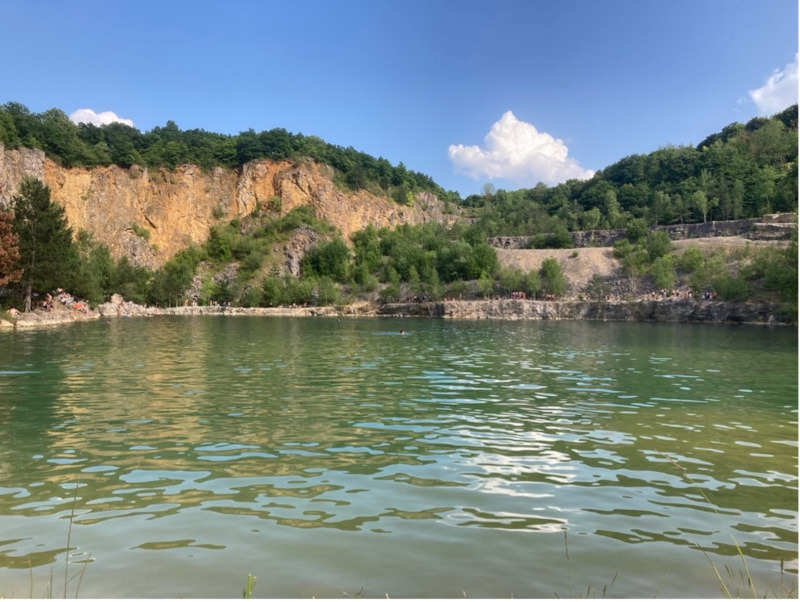
An image of a protected landscape area, the Czech Karst. It shows limestone rocks, light open deciduous woods and forest-steppes with flowering rocks and the canyon valley of Berounka River. Beginning to form in the Palaeozoic Sea 400-million years ago, it is also the largest karst area in Bohemia.

Charting the (Dis)course of Nature Restoration: The EU Nature Restoration Law in the Public Sphere in Czechia

The EU Nature Restoration Legislation was finally adopted in 2024, after going through the rounds of the EU parliament since 2022. The passing of the law marks a key moment in the EU’s pursuit of the European Green Deal, adopted in 2019. The European Green Deal is the EU’s growth strategy aimed at putting EU on the path to a green transition, with the ultimate goal of reaching climate neutrality by 2050. The ambitious Nature Restoration Legislation is expected to provide legal instruments to facilitate the restoration of declining ecosystems across the European Union. It supports some of the key goals of the biodiversity pillar of the Green Deal (the EU Biodiversity Strategy 2030), akin to how the European Climate Law (Regulation (EU) 2021/1119) sets legally binding climate neutrality targets for the member states. Some of the measures outlined in the regulation include supporting sustainable agriculture, greening cities and towns, protecting pollinators, and restoring wetlands and rivers. (read more...)

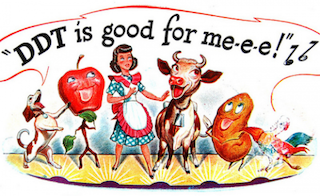
A picture suggesting that DDT is good for crops and safe for human beings and wildlife.

The Silence before the Silent Spring: Narratives of Modernity and the Silences around the Toxicity of Pesticide Use

Pesticide-use and the control of pest populations with synthetic chemicals are a subset of the history of the “modernization” of agricultural practices. This narrative positions pesticides as an antidote to the food supply problem of the growing world population, but it remains eerily silent on the assault on the entire ecosystem that the continuous use of chemicals entails. These moments of silence in history act as heuristic devices that crystallize aspects of historical production that best expose when and where power gets into the story (Trouillot and Carby, 2015, p.15). The dominant narratives and silences around the question of pesticide exposure point towards the locus of power in the story of the development of modern agriculture. (read more...)

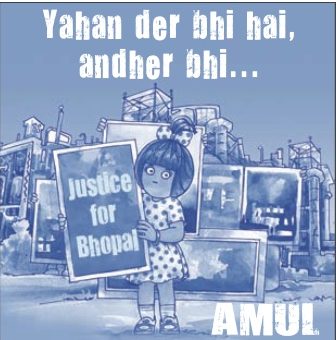
Judicial delays in Bhopal Gas Leak Case

The Making of Vizag Gas Leak Disaster: Procedural lapses or Regulatory Design?

Under the Environment Protection Law in India, industries that process petrochemical-based products, such as styrene, require two levels of clearances—an Environmental Clearance (EC) from the Union Ministry of Environment, Forest and Climate Change (MoEF&CC) and a Consent to Operate (CTO) from the State Pollution Control Board (SPCB) which needs to be renewed every five years. As per the reports of the Center for Science and Environment, LG Polymers India had not adhered to rules at both these levels. The inquiry into the causes of the Vizag Gas leak that wreaked havoc in the lives of the denizens of the port city has made it clear that the industry has thrown to the winds any sense of responsibility by withholding crucial information whilst applying for the Environmental Clearance (EC) and Consent To Operate (CTO), thus subverting the regulatory framework to its advantage.  (read more...)

Responding to the pandemic of 21st century : Dynamics of power, intersections and the ‘Imagined Corona’ in India

The current times have seen a surge of concern around the soaring cases of the global pandemic of COVID 19. The novel nature of the virus has pitted several countries including India in flux, to understand the nature of transmission, virulence, and the case-fatality of the disease. To contain the spread, stringent measures like lockdown(s) and social distancing have been imposed. In light of the recent turn of the events, the reactions to the disease and the government responses to it have been varied. (read more...)